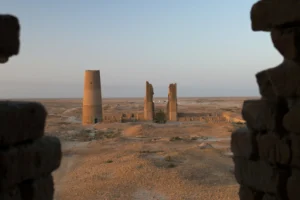
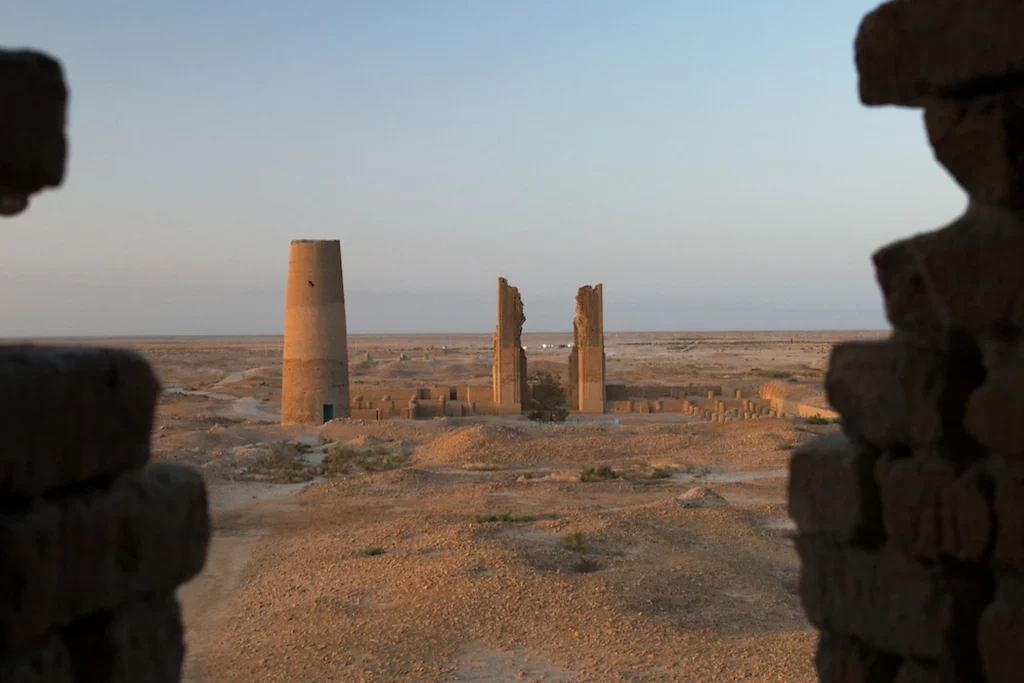
Today, it remains one of the country’s least known yet most striking historical sites, located on the Misrian Plain.
Where Caravan Routes Converged
Dehistan was once a thriving торговый center. Caravans passed through its streets, linking distant regions of Central Asia. The city prospered through trade, crafts, and agriculture. Its vast territory – covering more than 200 hectares – still reflects its former grandeur, while inclusion in UNESCO’s tentative list highlights the site’s historical importance.
The Scale of a Forgotten Capital
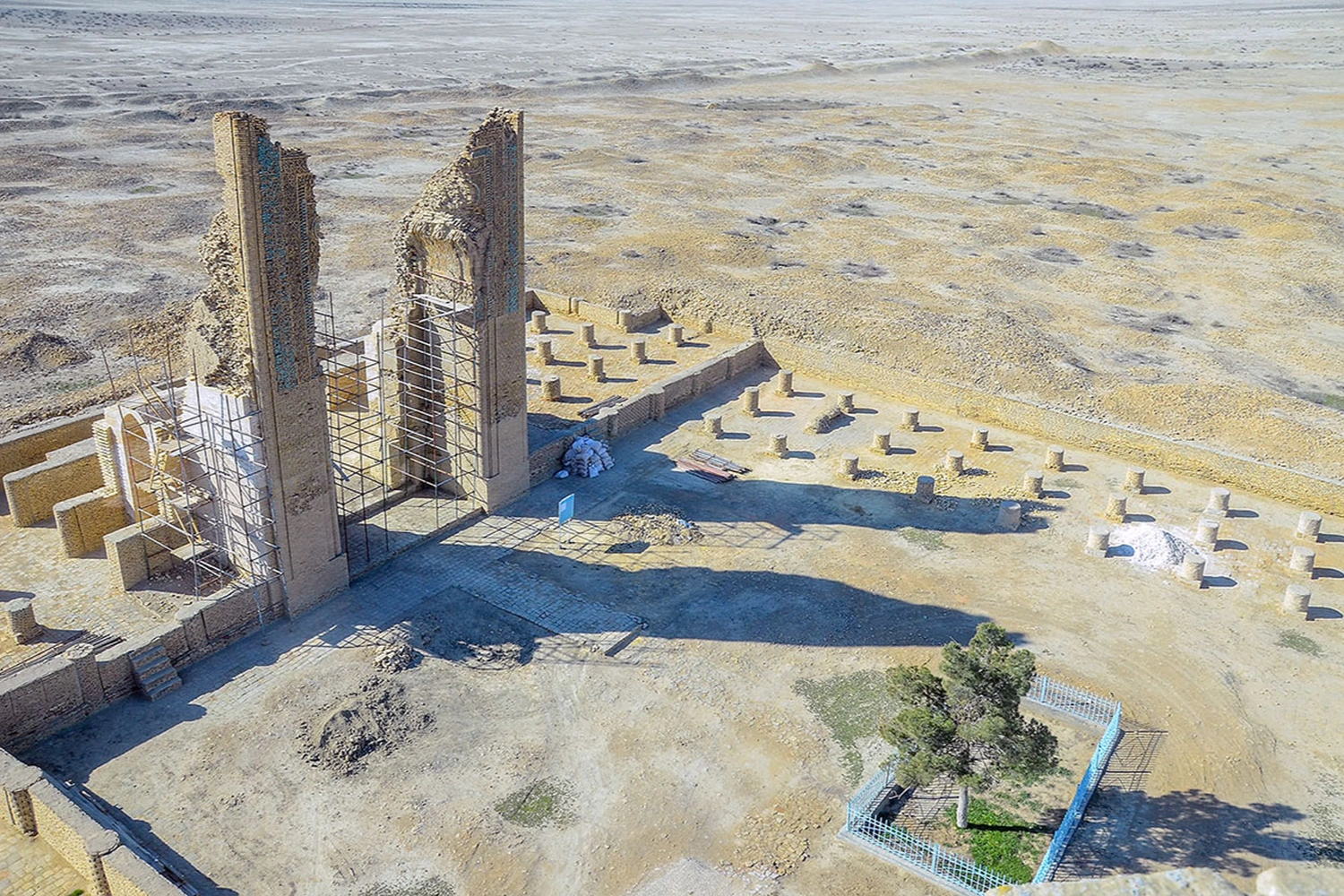
The first thing that stands out is the scale. Even from the remaining walls and structures, it is easy to imagine how large the city once was. Archaeological remains reveal foundations of residential quarters, public buildings, and technical facilities that once sustained urban life and prosperity.
A Journey Through Time
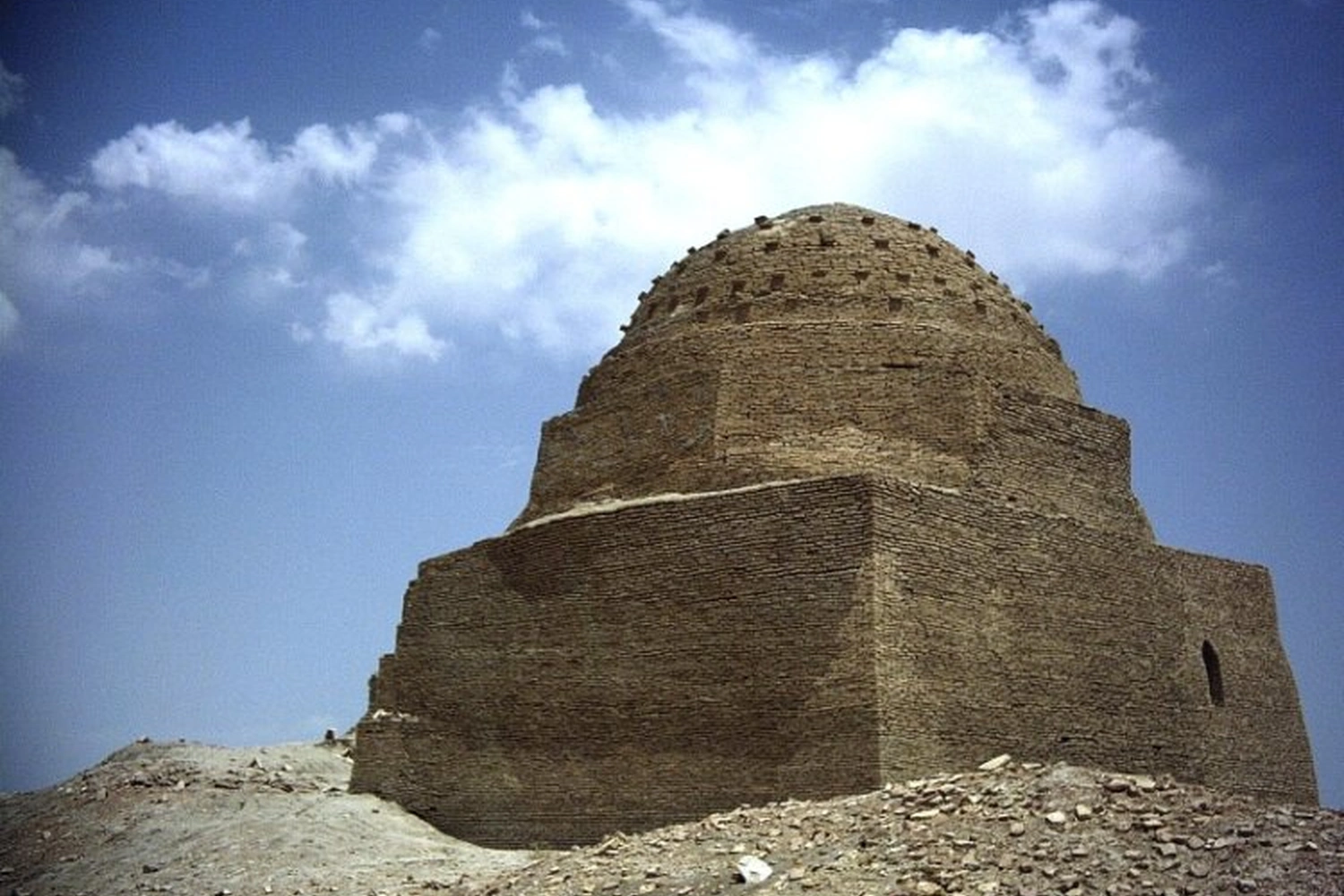
Walking among the ruins feels like traveling through centuries. The most prominent landmark is the Shir-Kabir mosque-mausoleum. Located several kilometers from the main settlement, it served both as a burial site and a place of worship. From its elevated position, sweeping views of the plain open up, offering a glimpse of how the city may have appeared at its height.
The City’s Sacred Architecture
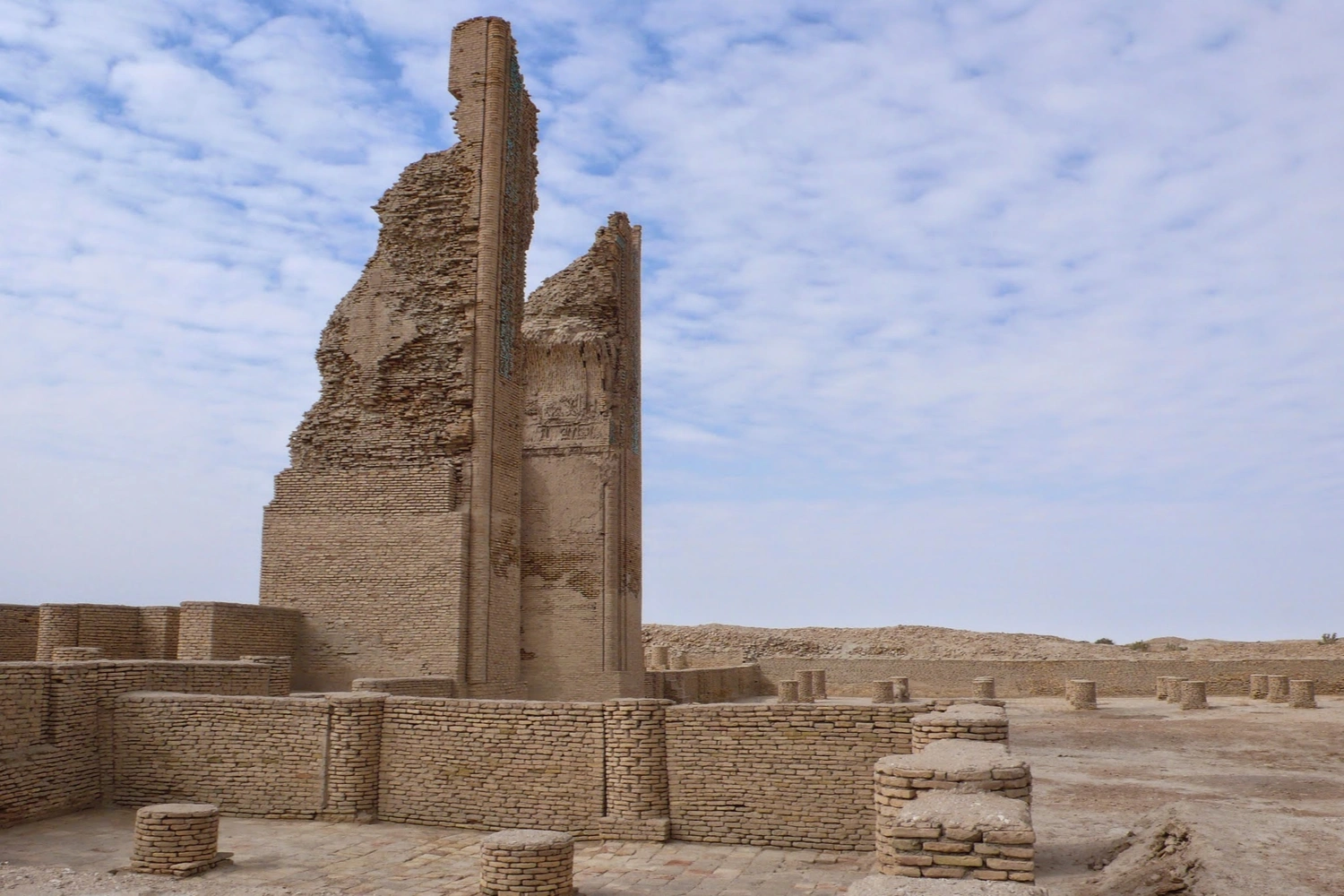
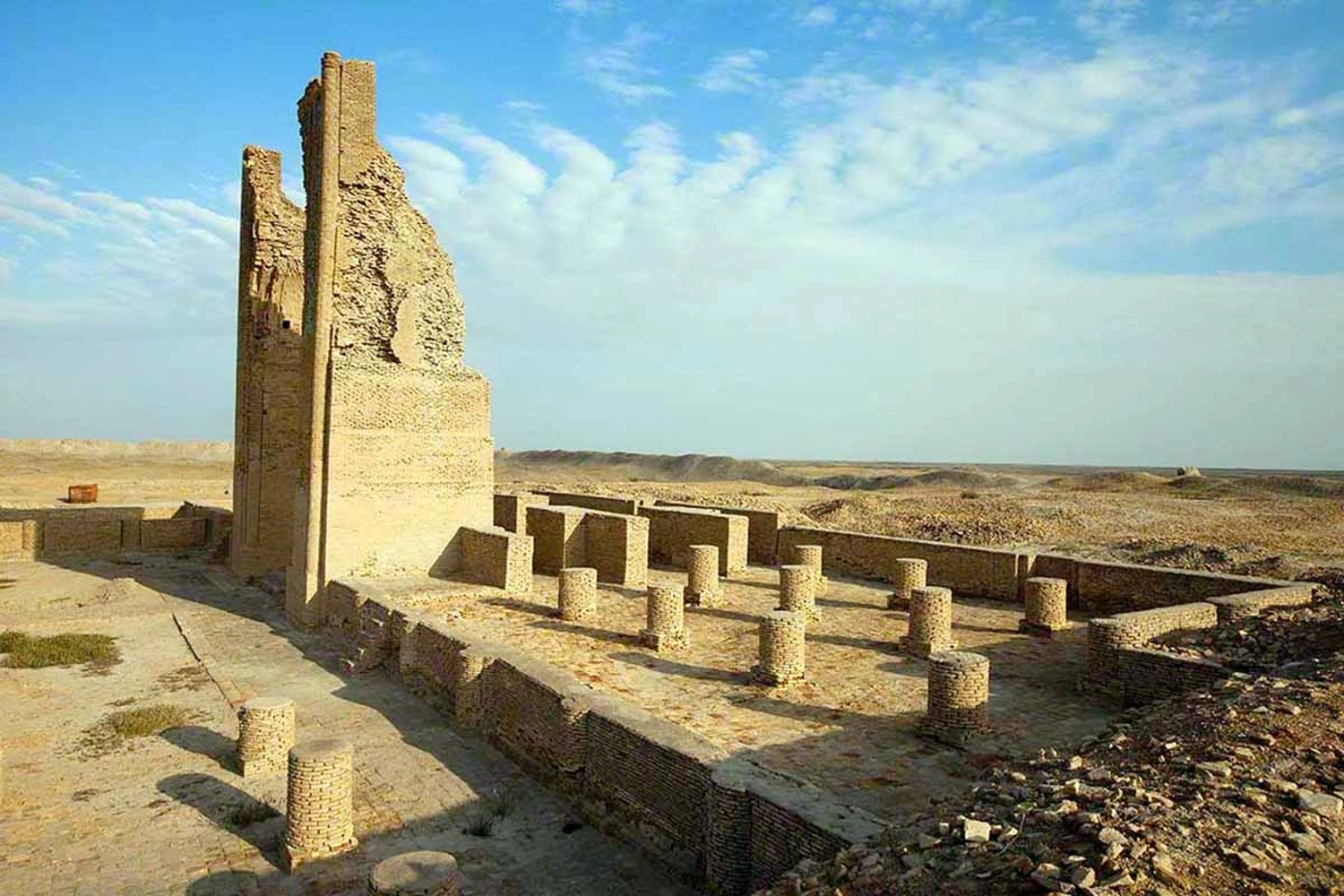
The Mosque of Khorezmshah Muhammad, a 13th-century congregational structure, has preserved its gates and columns. Decorative brickwork with floral and geometric patterns draws special attention. Here, the scale of the religious center and the importance of communal prayer become especially tangible.
Minarets as Part of the Urban Landscape
Dehistan’s minarets once served not only as towers for the call to prayer but also as key points in the city’s layout. One of them rises nearly 20 meters high and is adorned with bands of Arabic inscriptions and ornamental details. Climbing the internal staircase offers a view over the city, revealing the size of its quarters and streets.
The minaret of Abd al-Jafar Ahmad, the oldest surviving structure of its kind, dates back to the 11th century. Its patterned brickwork and Arabic inscriptions reflect the early stages of Islamic architecture in the region and convey the spirit of the medieval city.
Silence, Space and Desert Light
Dehistan captivates with its sense of isolation. This vast open landscape, untouched by tourist infrastructure, allows visitors to fully experience its scale and silence. Hours can be spent wandering, photographing, and taking in the wide panoramas.
Ancient roads and the outlines of former neighborhoods remain visible even today, while the surrounding semi-desert landscape has changed little over the centuries. The best time to visit is late autumn or early spring, when temperatures are comfortable and the light is soft and warm.
Travel Without Hurry
Dehistan does not demand much time and offers no entertainment. It is a place for slow exploration, quiet reflection, and a strong sense of space. Well suited to an itinerary across western Turkmenistan, it lingers in memory long after the visit. For travelers, this is a chance not only to see ancient stone structures, but also to feel like an explorer – witnessing how culture and religious traditions have evolved across these lands.