
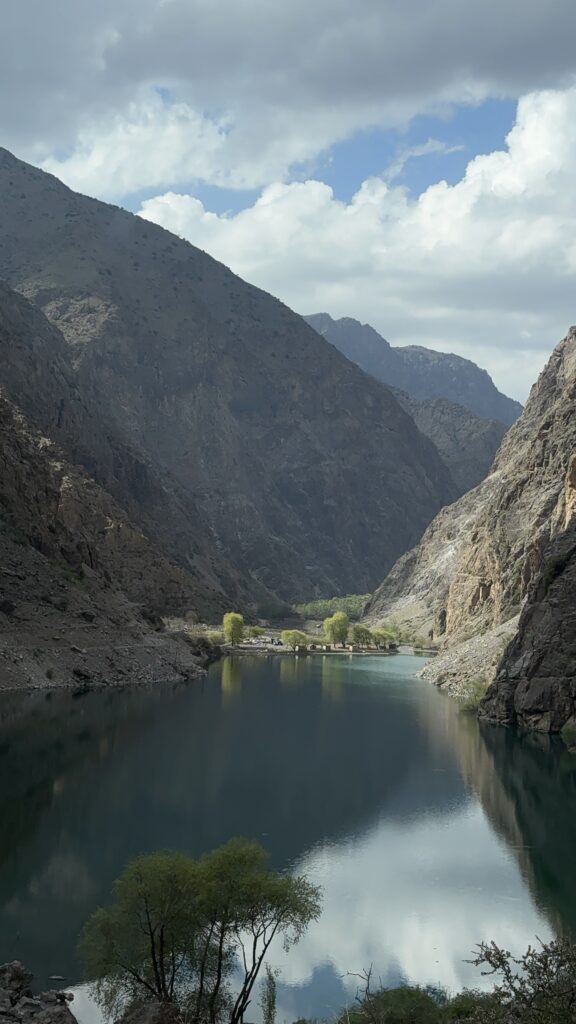
Gushor, translated from Tajik, means “watchful.” It seems to observe everyone who dares to approach its shores. Nestled between towering cliffs at an altitude of 1,771 meters, the lake is surrounded by sheer precipices.
The water here is nearly still, yet crystal clear, shimmering with green and blue hues. On sunny days, you can spot schools of small fish gliding among the large stones. And if you look closely, it seems as though metal plates lie at the bottom, catching the light—though in reality, it’s a natural mineral called mica.
Once, there was a tourist base here called “Marguzor Lakes.” In Soviet times, people came from all over the republic to hike the passes and breathe the mountain air. But nature reclaimed its place—after a powerful mudslide swept through, only the foundation remains, a stark reminder of who truly governs these mountains.
The lake is fed by mountain streams and is a source of a river that eventually flows into Soya. The water—bicarbonate and calcium-rich—is soft and full of life. It was once used to irrigate the Gurdara Valley, where farmers cultivated wheat in its fertile soil.
Gushor is the threshold of the true mountains. From here, many trails begin—leading onward to Nofin, to glaciers, and high mountain passes.