Why Visit During Ramadan?
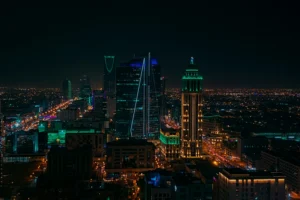
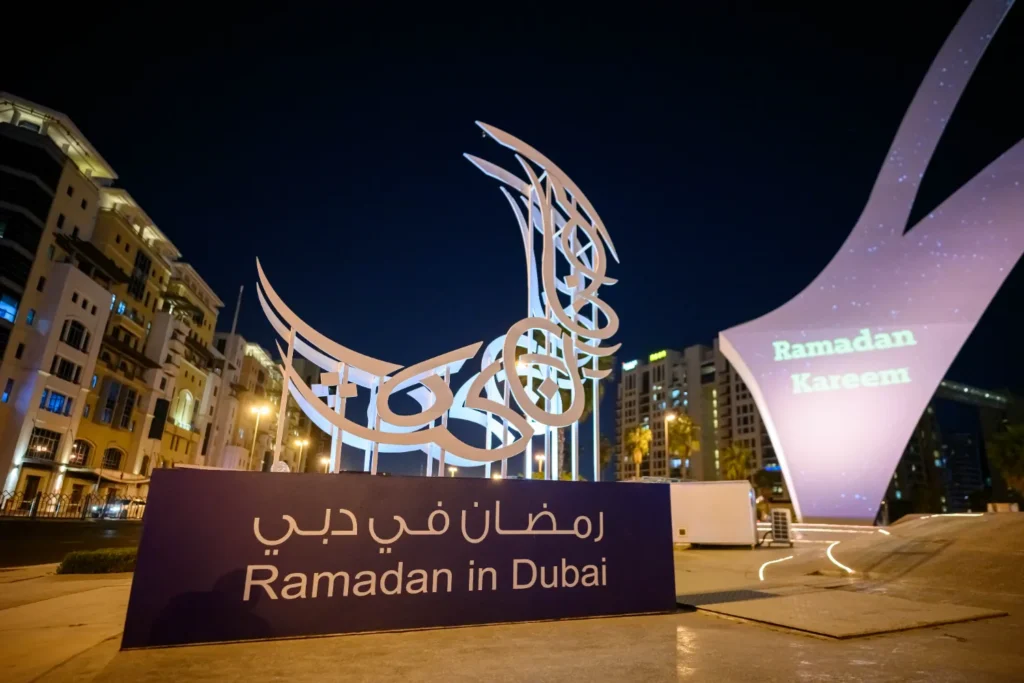
Winter in Dubai offers a pleasantly mild climate, with temperatures between 20–25°C (68–77°F). During the day, you can comfortably explore the city’s landmarks, while after sunset Dubai reveals a distinctive festive atmosphere. Tourist services continue as usual, but life shifts to the evening and nighttime hours: restaurants, shopping malls, and public spaces extend their opening times.
A Gastronomic Journey
Ramadan is, above all, a feast for the senses. The evening iftar and pre-dawn suhoor meals become meaningful rituals:
- The Majlis (Dubai World Trade Centre) hosts family dinners and gatherings beneath the stars.
- Asateer Tent (Atlantis, The Palm) offers a selection of international cuisines.
- Madinat Jumeirah invites guests to choose between the intimate Al Majlis and the Al Majlis Garden terrace overlooking the canals.
- Armani Pavilion at the foot of Burj Khalifa serves open-air iftar with iconic views.
- For those seeking something unusual, Frying Pan Adventures curates guided food walks through the markets of Old Dubai.
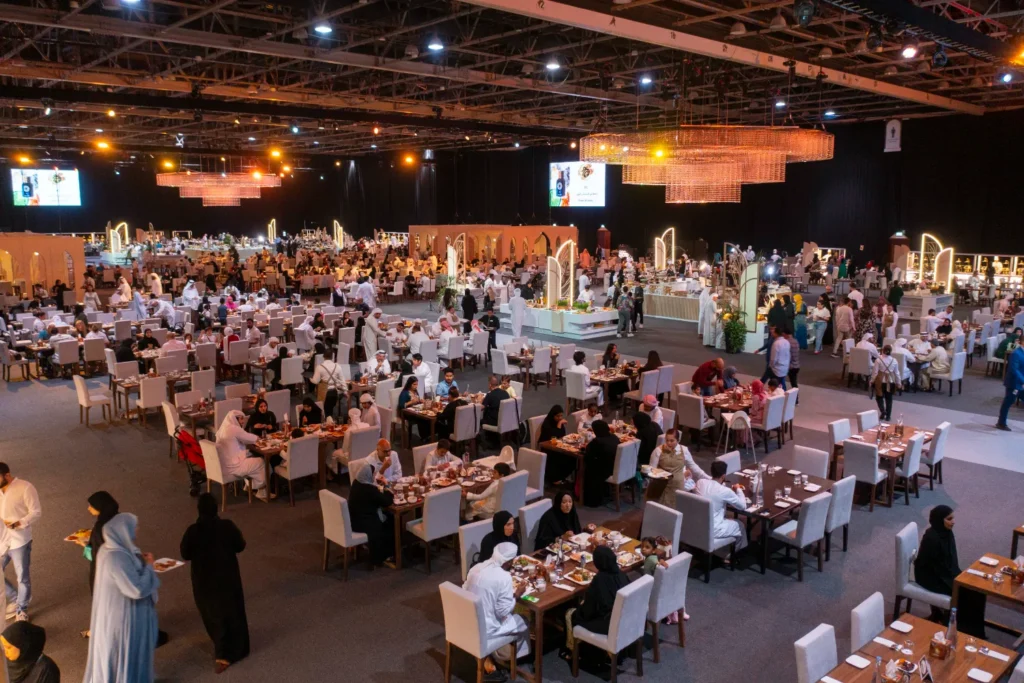
Those looking to escape the city can head into the desert. At Al Hadheerah (Bab Al Shams), traditional dishes are paired with falconry displays, live performances, and a night market atmosphere.
Festivals and Markets
During Ramadan, the city comes alive with fairs and celebrations:
- Ramadan District (Jumeirah Emirates Towers): street food and live concerts.
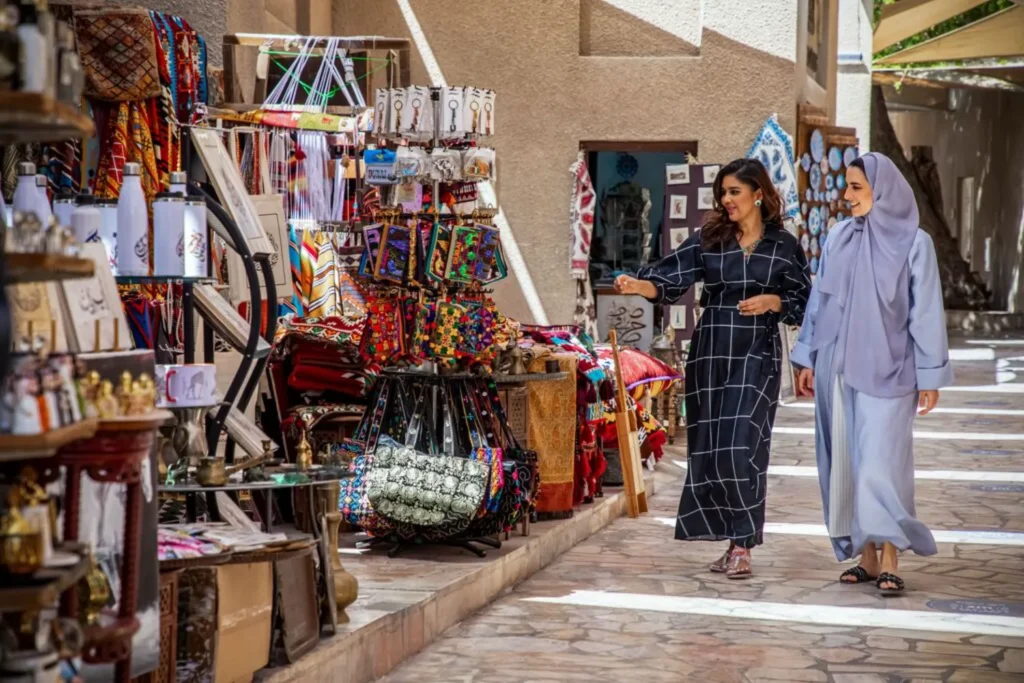
- Dubai Municipality Ramadan Souq (Deira): spices, dates, and handicrafts.
- Global Village: themed pavilions, cultural shows, and performances.
- Hai Ramadan at Expo City Dubai: international dinners and workshops.
- Ramadan Street Food Festival (Al Karama): 70 restaurants in one location (19 February–18 March).
Cultural Highlights
- Al Fahidi Historical District: heritage houses, museums, and traditional cafés.
- SMCCU (Sheikh Mohammed Centre for Cultural Understanding): guided tours and dinners offering insight into local culture.
- Etihad Museum: the history of the UAE told through the lens of modernity.
- Quranic Park: landscaped gardens with plants mentioned in the Qur’an and the mysterious “Cave of Miracles.”
Symbols of Ramadan
Each evening, the midfa al-iftar, a ceremonial cannon firing, signals the end of the day’s fast. One of the best places to witness it is Fort Island at Madinat Jumeirah.
The Finale: Eid al-Fitr
The celebration of Eid al-Fitr (March 20–22), marking the end of the fast of Ramadan, fills the city with joy. Communal prayers, family gatherings, concerts, and traditional performances take over public spaces. Simply greeting someone with “Eid Mubarak” is enough to feel part of this magical celebration.
Ramadan in Dubai is more than a shift in schedule. It’s a chance to feel the city’s soul, where cutting-edge modernity meets centuries-old tradition.