
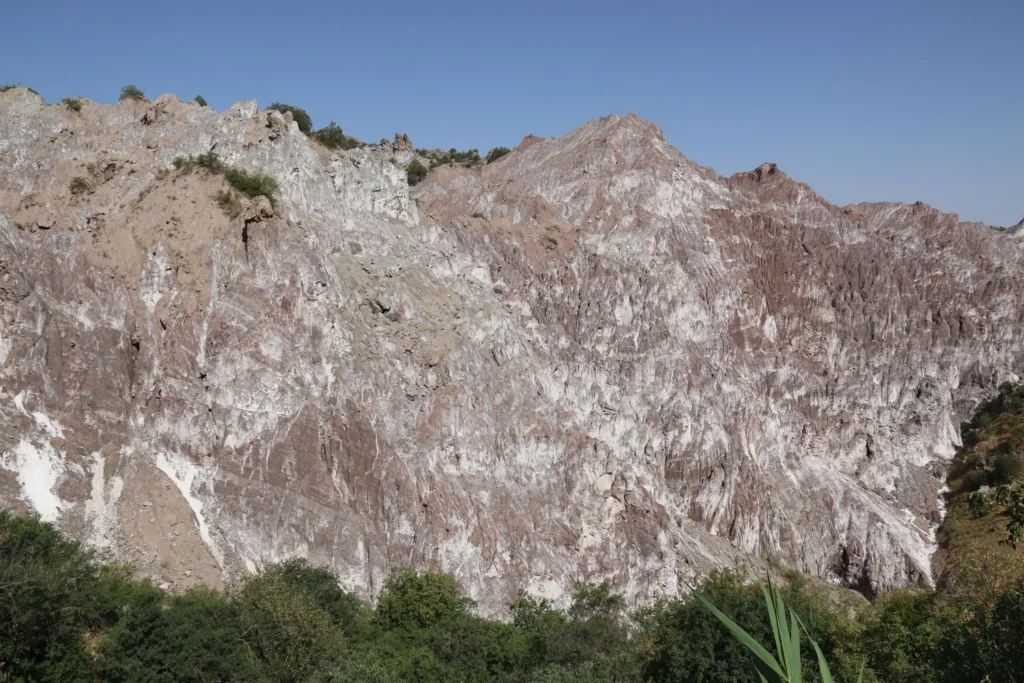
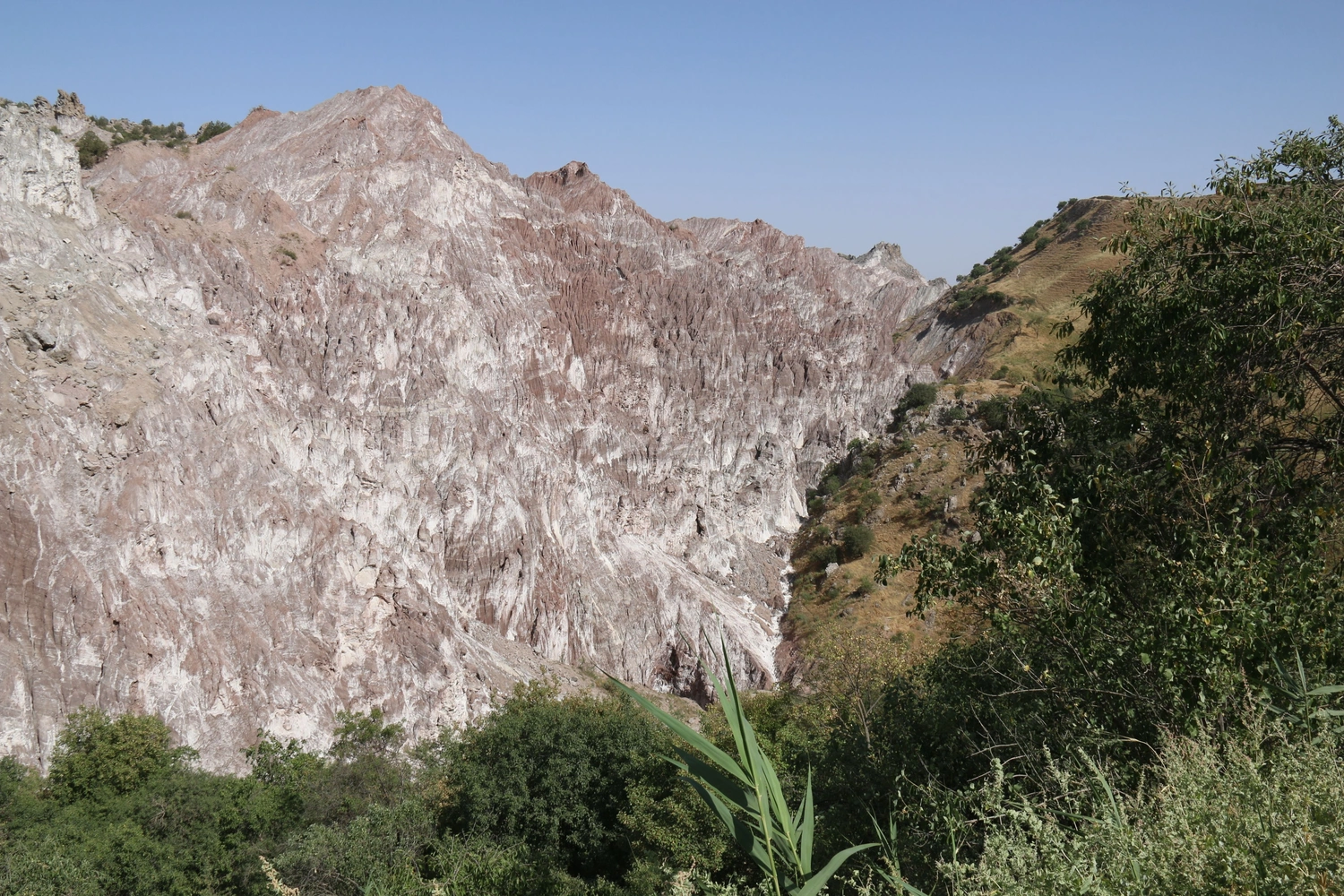
Rising in southern Tajikistan, Khoja-Mumin Mountain can be seen from miles away, appearing like a giant dome standing proudly on the horizon.
A Mountain That Constantly Changes
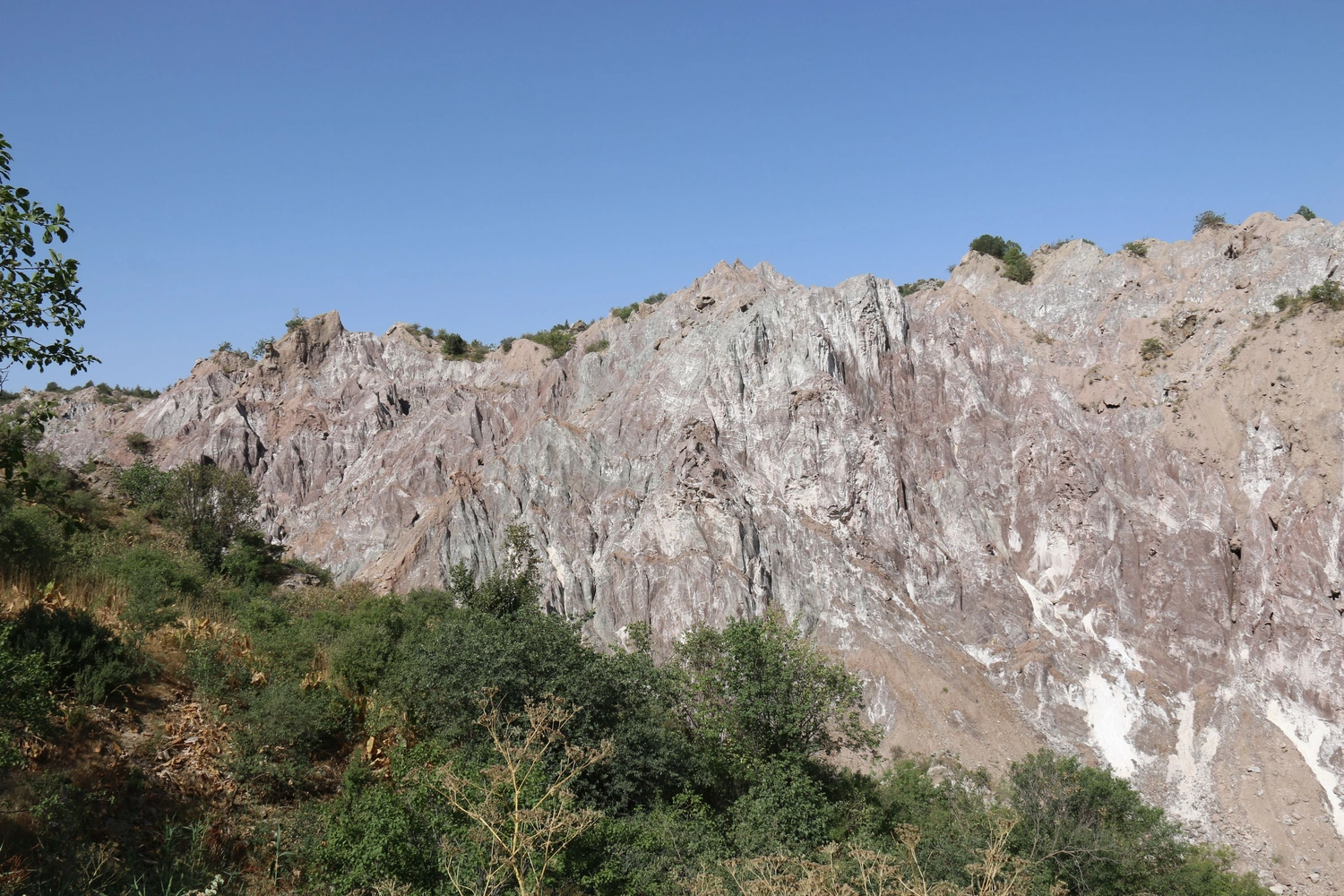
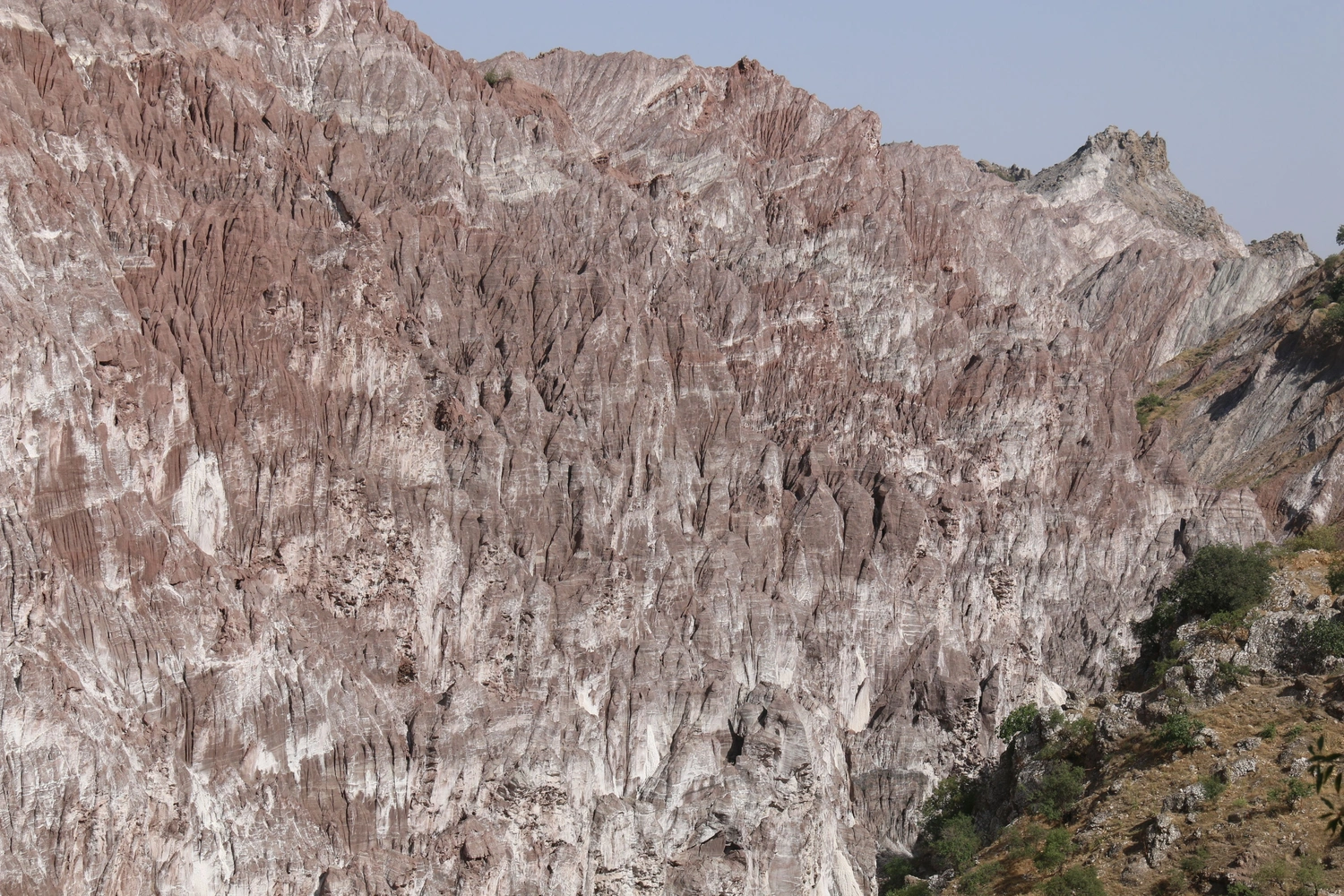
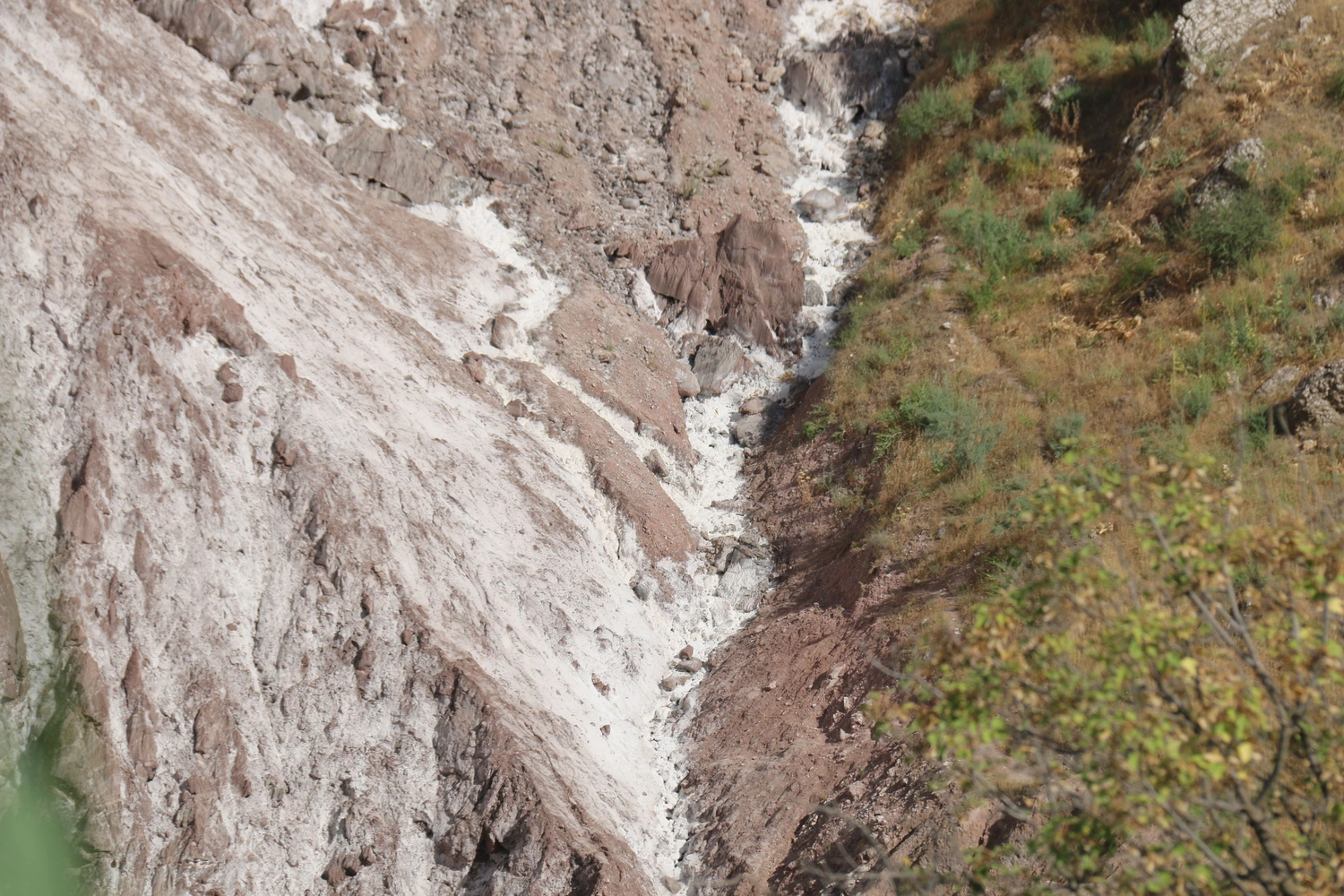
Khoja-Mumin is alive in its own way. The mountain is almost entirely made of rock salt, and its shapes are constantly shifting. Wind and water carve new caves, pillars, and salt “towers,” so it never looks the same twice. Even the salt inscriptions atop the peak vanish and reappear with time, as if the mountain itself decides when it wants to be read.
Legends and Myths
Khodja-Mumin is shrouded in legends. One tells of a righteous man named Khodja Mumin. When his brother refused to give him salt, he prayed to God asking to be transformed into a salt mountain, so that people would never suffer from a lack of salt again. Notably, as early as the 13th century, Marco Polo wrote that the salt from this mountain could supply the whole world.
Some stories are even more mysterious. They speak of the mountain’s paths that seem to shift every time, so that no one ever climbs and descends the same way twice.
A Surprising Oasis
Despite its salty nature, Khoja-Mumin is surprisingly vibrant. In spring, the mountain is covered with bright tulips, and its slopes are dotted with saffron, thyme, mountain onions, hawthorn, and even pistachios. Freshwater springs allow plants to survive in a place where life seems impossible.
The salt caves, extending hundreds of meters into the mountain, leave a special impression. Inside, pure salt stalactites and stalagmites glisten, the air is cool, and the acoustics are unique. One cave, known as the “Tiger Cave”, produces a deep, haunting roar when the wind passes through it, a sound that once terrified locals.
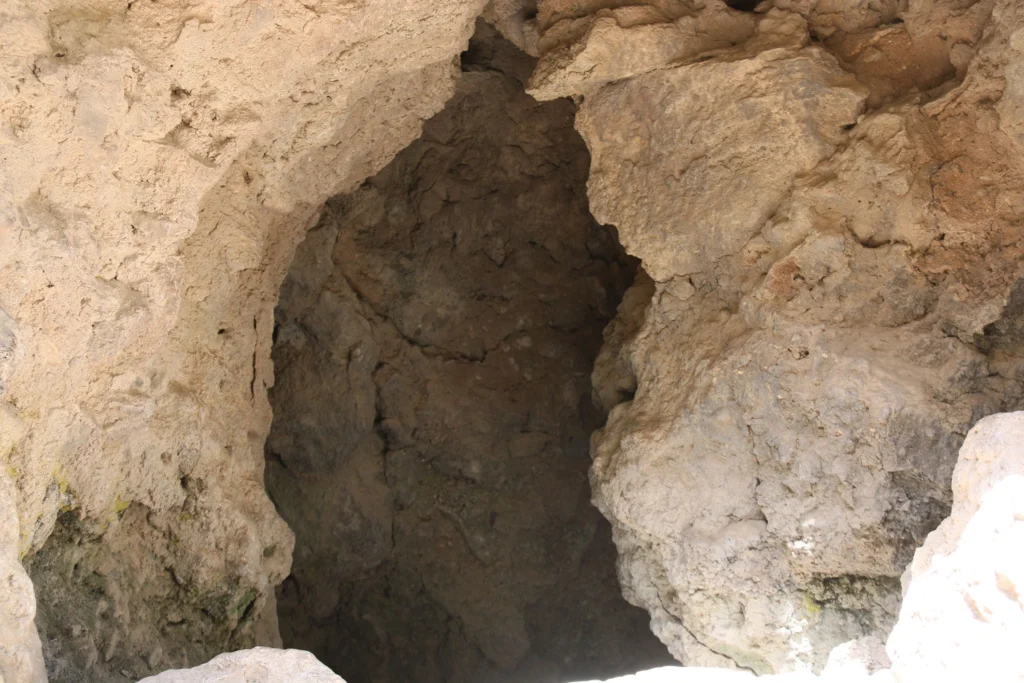
Photo: Tajikistan Travel
How to Get There
The best time to visit Khoja-Mumin is spring or autumn, when the weather is mild and comfortable for hiking. Take plenty of drinking water, as local springs are often salty. Most visitors reach the mountain from Kulob or via the Vose District, by car or taxi.