My husband and I set off on our long-awaited trip, leaving Tashkent at around 5 a.m. The drive was long—about seven hours—but we made several stops to stretch our legs. The longest one was at a spot we referred to as “Jizzakh Samsa.” Each samsa weighs at least half a kilo. Yes, it’s greasy, but it’s packed with hefty chunks of meat and scalding broth that can burn your fingers. Eat just one, and you’ll be full for the rest of the day.
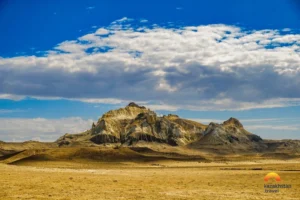
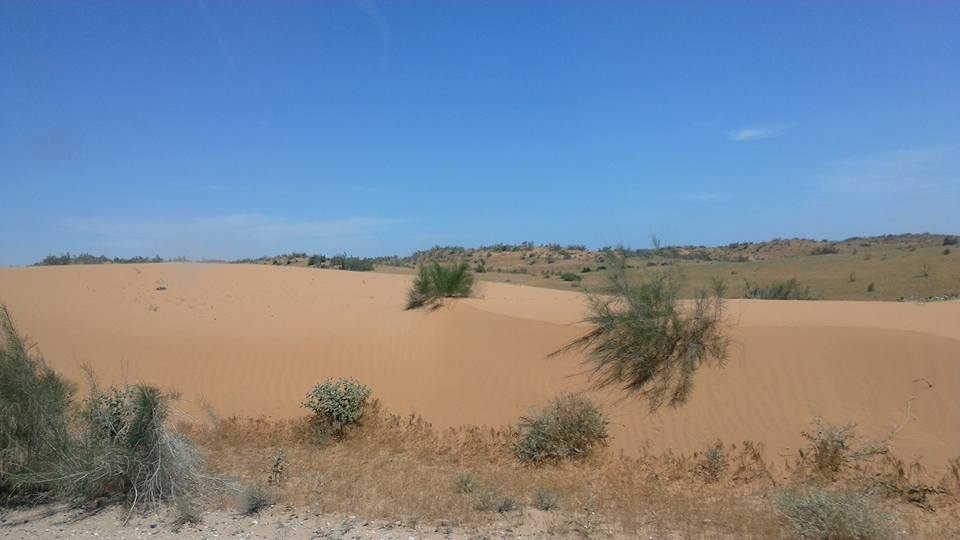
We knew we were close to the camp when we saw red sands and the abundance of saxaul trees. The Aydar camp is located in the Kyzylkum Desert, around 10 kilometers from the lake itself. I’d only seen it in my colleagues’ and friends’ social media—now it was right in front of me: a real yurt camp.
You’ll sleep on beds with crisp sheets. Besides that, there’s not much else in the yurt—except for traditional carpets on the floor—but there are power outlets, and the mobile signal works. But after a night here, trust me, all you’ll care about is the bed.
The shower cabins and another important room are located not far from the yurts. If you decide to visit the latter in the middle of the night, be prepared to walk under the watchful eyes of the stars. There are no dangerous pests on site—the area is closely monitored and treated regularly for insects, as you’d expect in a desert environment.
Everything delicious begins at sunset. You’ll be invited to a kind of dining area, where a festive table will be set for you. Everyone is served the same meal: plov cooked over an open fire or beshbarmak, a few types of salad, and flatbread. Fragrant hot tea is poured generously, followed by fresh fruit and sweets to complete the feast.
As you dine, something magical begins to unfold just beyond the walls. In less than thirty minutes, the sky transforms into a dome strewn with stars. For a moment, it feels like you’re gazing at them—and they’re gazing right back at you. The Milky Way is clearly visible to the naked eye. There’s only one thing that might distract you from this celestial beauty: the voice of an akyn, who begins his musical tale to the sound of a dutar (a traditional plucked instrument). Drawn by the music, you follow the sound and find other guests—many of them foreign tourists—seated around a large campfire, each lost in their own thoughts. Then the rhythm shifts, and with it, the mood. Local guests are the first to rise and dance, soon joined by the tourists. With smiles shining as brightly as the stars, they try to mimic the movements of the locals. At first, you simply watch. But within moments, you find yourself dancing too. A feeling of lightness takes over—you want to laugh and rush into the whirlwind of the dance. Even my husband, who never thought of himself as a dancer, was swept up in this celebration of life.
Do you think, after a program like that, we really needed anything more than a place to sleep and those rooms next to the yurts?
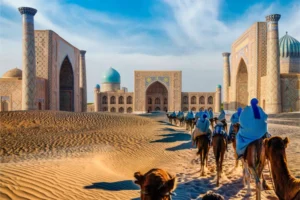
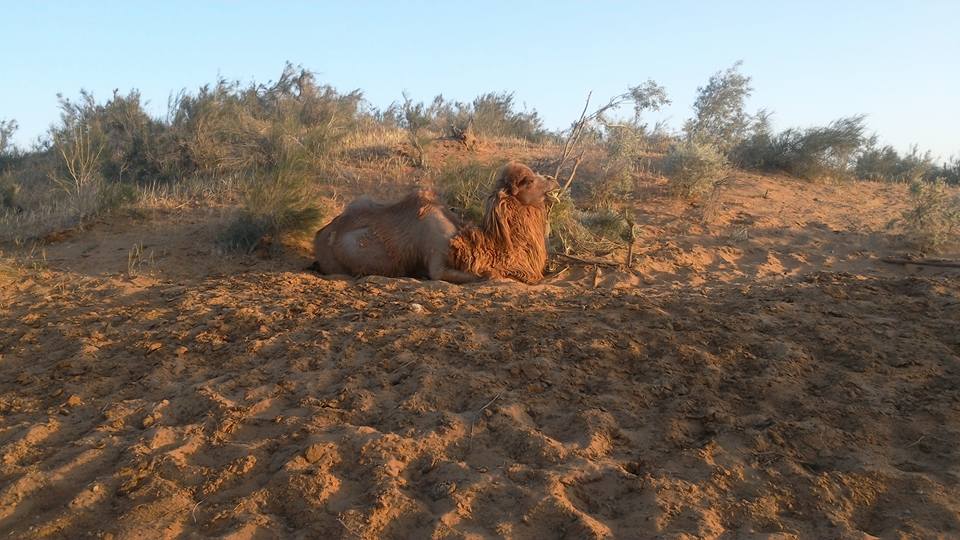
The next morning, after a hearty breakfast, we were off on a camel safari. Riders took turns, waiting patiently for their moment to glide through the dunes past saxaul bushes. Our camel handler shared stories about the desert’s plants and animals. We ourselves only spotted a jerboa and a tortoise.
We jumped into the car and headed toward Aydarkul. It’s a striking sight — to see such a lush oasis in the middle of the desert. The lake itself is vast, with the soul of a sea, stretching over 200 km in length, 30 km in width, and averaging 13 meters in depth.
It formed back in the 1970s as a result of water runoff from reservoirs.
We visited in September—the weather was perfect: a little over 30°C, with gentle sun and warm water.
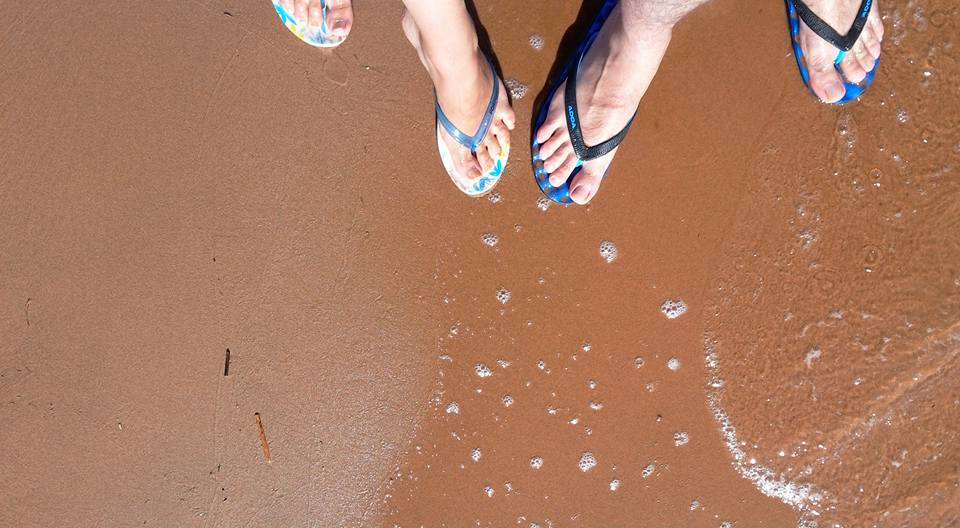
The beach was clean, with sunbeds and umbrellas. One of the best things is that it feels like you have the entire lake to yourself—or, at most, to the group you came with. The water is soft and slightly salty, and the wet sand darkens to a deeper hue with every wave.
Back at camp, a delicious lunch awaited us. And if just 16 hours ago, during dinner, the place was buzzing with noise, now everyone ate in silence, with great appetite. Filled not just with food but with vivid impressions, we slowly began to prepare for the journey home. It was faster this time—and samsa-free. All we wanted was to reach our bed, let out a contented sigh, and drift into a sweet sleep, once again accompanied by the shining stars.