Plov. A Symbol of Hospitality Uzbekistan
Fragrant and hearty, plov is more than a national dish in Uzbekistan — it’s a symbol of pride and welcome. Picture a warm summer evening and the sound of quails — birds that symbolize good fortune. You’re invited to a large table, and in front of you is a steaming lyagan, a wide dish brimming with freshly cooked plov. Rice, meat, carrots, and spices come together in perfect harmony.
Plov is served on holidays and family occasions, and every step of its preparation — from searing the meat to steaming the rice — is part of a culinary ritual rooted in patience, precision, and care for one’s guests. Each grain holds the flavor of a tradition passed down in every Uzbek household. And when it comes to types of plov, there are dozens. Here are a few of the most iconic.
On September 8, 2017, Tashkent set a Guinness World Record for the largest plov ever made. Weighing in at 7,360 kilograms, the dish was cooked over six hours by more than 50 chefs at the O‘zbegim traditional culture festival. The recipe called for 1,500 kg of beef, 400 kg of lamb, 1,900 kg of rice, and 2,700 kg of carrots. The certificate was presented by Guinness World Records Vice President Richard Stenning. The event was organized by Milliy TV.
Choykhona Plov
A signature of the Fergana Valley. Here, the onions go in first, the rice is the famed devzira variety, and the oil is cottonseed. You’ll find this dish in teahouses, often by pre-order. In Tashkent, head to The Choyxona ($31 per kg; serves 10–12), or try Do’stlik Choyxonasi in Andijan ($30 per kg).
Samarqand Plov
The pride of Samarkand. This version is cooked in layers: rice, meat, and carrots are never mixed. The result is a more delicate, less oily texture. Try it at Joni Osh in Samarkand ($7 per portion; serves two).
Xorazm Plov
Legend says that in ancient Khorezm, a special plov known as chalov was made for kings — slow-cooked for 10 hours with hand-cut carrots in mid-air and richly marbled meat. Today, modern Xorazm plov is simpler, but still bold in flavor. Thick-cut carrots and rich aroma remain the hallmarks. Try it at Khiva Moon in Khiva ($39 per kg).
Wedding Plov
This special-occasion plov includes chickpeas (nukhot), raisins (kishmish), lamb fat (kurdyuk), and sometimes quail eggs or qazi sausage. On an ordinary day, try a scaled-down version at Lali in Tashkent ($6 per portion).
Bukhara Plov (Osh-i Sofi)
This sacred dish is cooked in copper cauldrons known as deg-i-mis, their bottoms lined with tinned tin. Each ingredient is boiled separately, then layered and finished with hot sesame oil. The name osh-i sofi means “pure food.” Raisins are a must, along with spices like cumin, saffron, and turmeric. Avicenna himself recommended this plov for its healing properties. Try it at Osh Joy in Bukhara ($3 per portion).
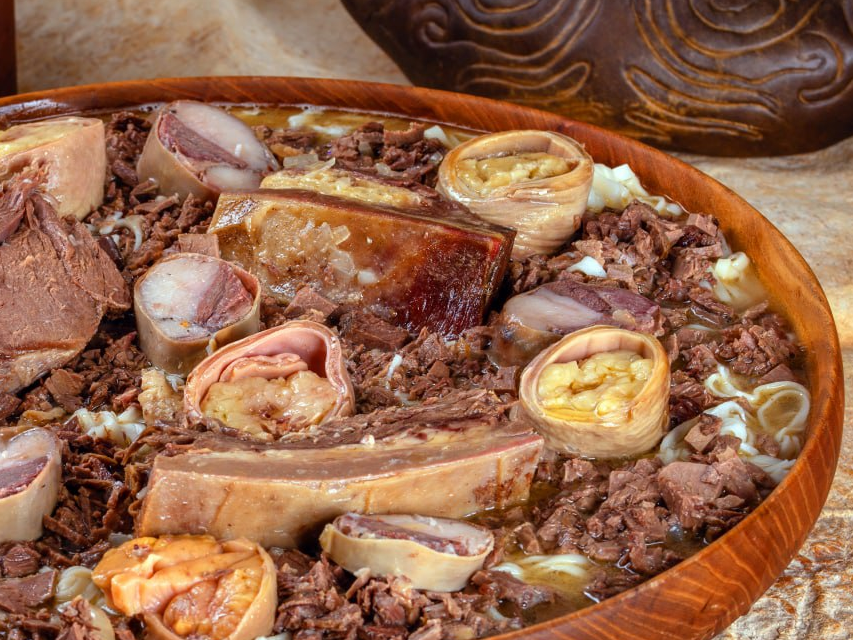
Beshbarmak. Five Fingers of Unity Kazakhstan
The undisputed centerpiece of a Kazakh feast, beshbarmak means “five fingers” — a nod to the traditional way of eating it by hand, symbolizing unity, closeness, and respect.
It begins with slow-simmered horse meat, lamb, or beef, enriching the broth with flavor. While the meat cooks, dough is rolled out and cut into wide strips or squares — each cook with their own flour-and-water secret.
Once ready, the meat is served over boiled dough, ladled with broth, and topped with onions simmered in the same broth. The combination of tender meat, delicate noodles, and rich broth is perfectly balanced.
But beshbarmak is more than a dish — it’s a philosophy. It brings family and guests together at one dastarkhan and reflects the heart of Kazakh hospitality. It’s a shared ritual of food, storytelling, and tradition.
Try the real thing at Sandyq, a chain of Kazakh restaurants with locations in Astana, Turkestan, Shymkent, and Almaty ($15 per portion).
Beshbarmak. Kyrgyzstan
The Kyrgyz version of beshbarmak carries the essence of nomadic generosity. Unlike the Kazakh style, it often uses lamb and features thinner noodles known as kesme.
The meat is simmered in a large cauldron, and the resulting broth forms the base for chyk, a sauce served on the side. The meat is finely shredded and mixed with the noodles. Then comes the final touch: onions softened in broth and an aromatic dressing.
Beshbarmak is served on a shared tray, with prized pieces of meat or kurdyuk reserved for honored guests. Before the main course, guests are often offered a bowl of hot shorpo (broth).
Try it at Supara, an ethno-complex in Bishkek ($144 for six people), or in teahouses across the country.
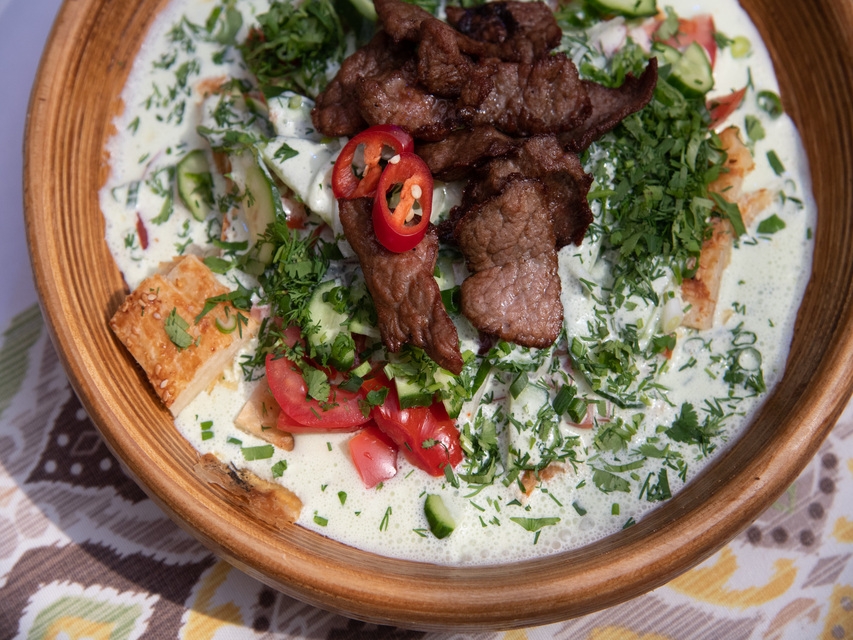
Qurutob. Layers of Sunshine Tajikistan
Qurutob is one of the oldest dishes in Tajik cuisine — simple, rich, and soul-warming. Bread soaked in qurut (salted, dried yogurt curds), butter, herbs, and onions: it’s a taste you don’t forget. Originally a farmer’s lunch, it’s also a dish meant for sharing — scooped from a deep wooden bowl known as tabak. The name comes from qurut (yogurt balls) and ob (water).
Bread — usually flaky fatir or katlama — is torn and soaked in qurut dissolved in water, salted and peppered. Fried onions in clarified or linseed oil are layered on top, followed by fresh vegetables and herbs. Qurutob is served cold.
In some versions, chickpeas, pickles, or meat are added to make it a main course. In Tajikistan, you’ll find qurutob in nearly every café and restaurant — a staple that’s also spread across Central Asia.
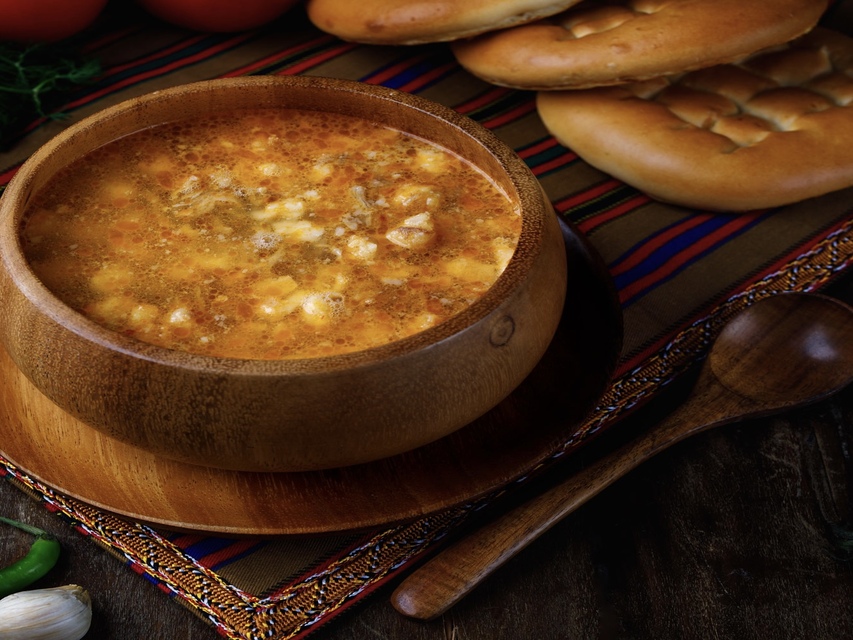
Dograma. A Bowl of Ancient History Turkmenistan
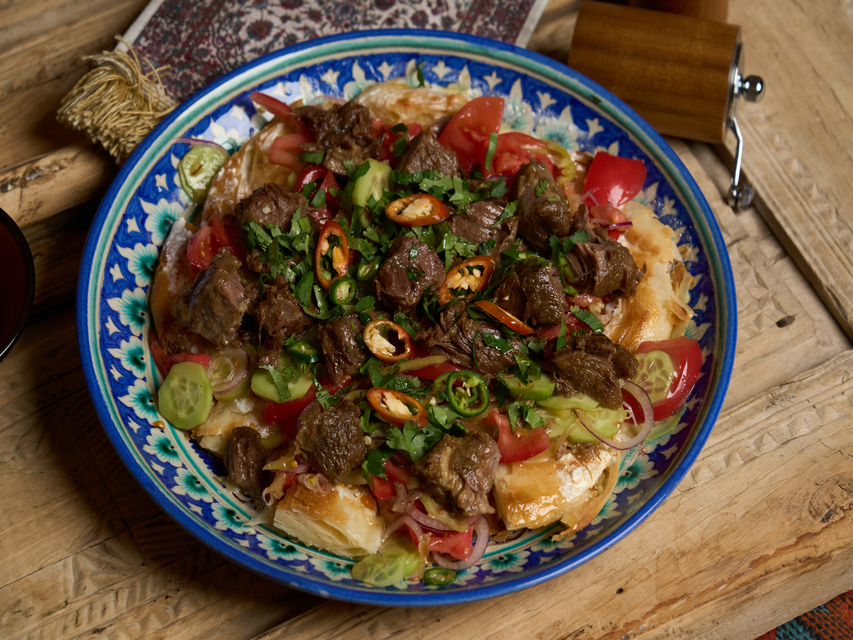
Dograma is among the most authentic Turkmen dishes, with no direct counterpart in neighboring cuisines. Some say it originated in pagan times and has long been reserved for major celebrations. The ingredients are deceptively simple: lamb, onions, and dense, unleavened bread called chorek. The meat is slowly simmered, then cooled and mixed with shredded bread and raw onions. Before serving, the mixture is drenched in hot broth — all by hand, with the entire family taking part.
Dograma is rare and seasonal — typically made to order or for holidays. But if you’re lucky, you might find it at a roadside café where someone’s grandmother is behind the stove. Or stop by Yhlas in Annau ($7 per portion, available by pre-order only).