The theme of the Bukhara Biennial is “Recipes for Broken Hearts.” Legend has it that the son of a Bukhara ruler once fell in love with a girl from a modest family. He hid his feelings from those around him, and his longing completely broke him. The great scholar and physician Abu Ali ibn Sina, better known as Avicenna, offered to help. The names of Bukhara’s mahallas were recited to the sorrowful prince one after another, and when the name of his beloved’s neighborhood was mentioned, his pulse quickened. Ibn Sina advised marrying the couple, and so that the young man, who had worn himself down with grief, could regain his strength, he devised a nourishing dish-plov.
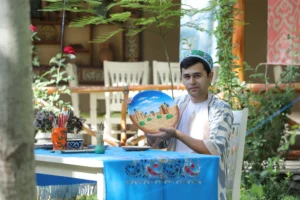
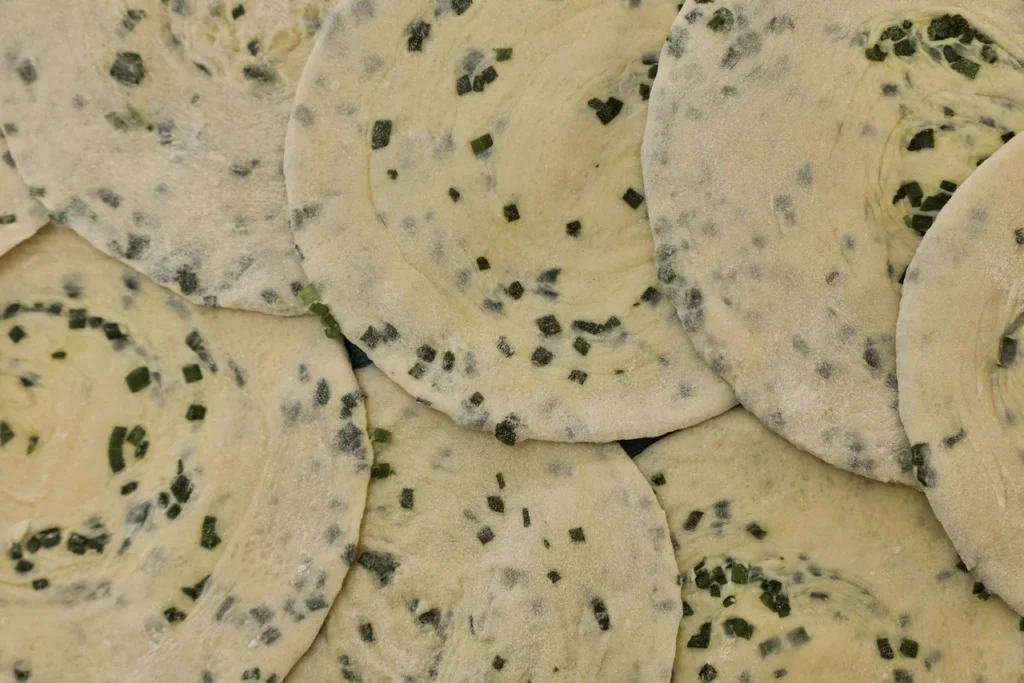
Yes, the theme of food inevitably ran through the exhibition and program-sometimes explicitly, sometimes metaphorically. The Biennial features the project “Oshqozon” (translated from Uzbek as “stomach”)-a café-metaphor where chefs from Uzbekistan and abroad create dishes accompanied by lectures, master classes, and performances.
According to curator Diana Campbell, the format of the exhibition is “an expanded feast of art and culture held at spaces across Bukhara that have been renewed for contemporary life while remaining informed by their rich past. The exhibition echoes the celebrations of the fourteenth-century Timurid Empire, which featured an abundance of art, music, poetry, dance, and of course, food, that could extend for as long as three months.”
The Biennial in Bukhara runs until November 20, 2025. To explore the art objects, installations, and other exhibitions presented within the pavilions, you can visit daily from 10:00 to 22:00 (closed on Mondays). Outdoor installations are available to view at any time.
Yet it would be a mistake to assume that this art festival is devoted solely to gastronomy, even though Uzbekistan—and Bukhara in particular—is justly renowned for its gastronomic tradition.
The curators placed the focus on human feelings and the ways of coping with them. Reasons for sorrow have never been scarce, and Bukhara’s ancient, at times dilapidated, architecture remind us of that better than words.
The Biennial of 2025 serves as a kind of remedy—an attempt to preserve and revive the ancient city.
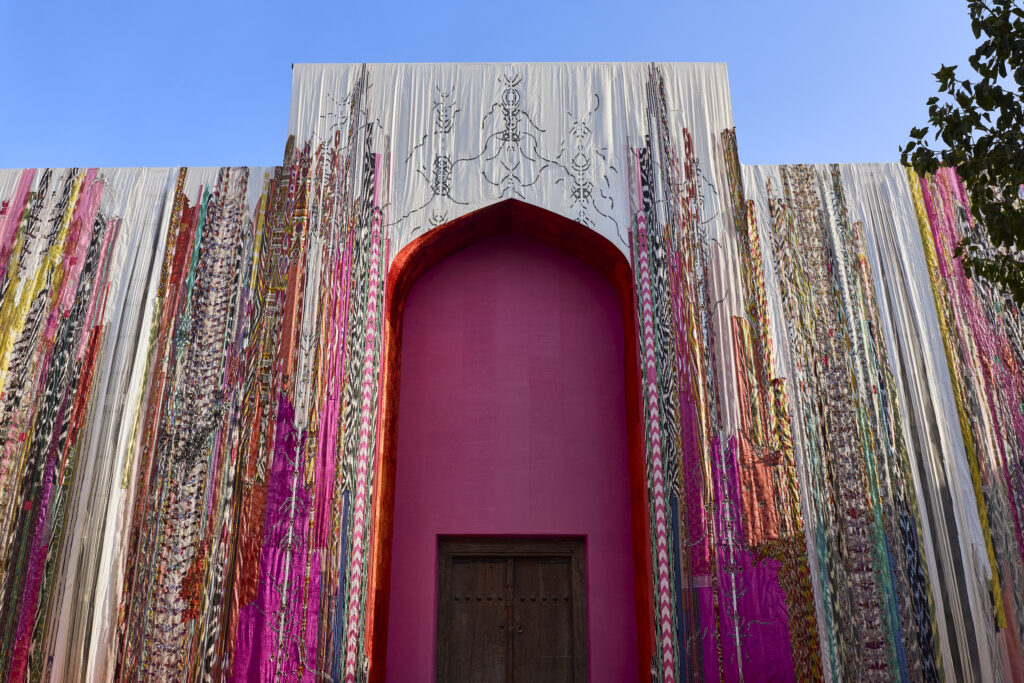
A defining feature of the Biennial is that the invited artists—both foreign and Uzbek—worked in close collaboration with local craftsmen. They were required to create their projects right here in Uzbekistan, using materials familiar to the region. That is why it was especially impressive that Bukhara welcomed names usually seen on the posters of the world’s major museums.
Among them, British sculptor Antony Gormley, author of The Angel of the North, which spread its wings in England, and other impressive works. In Bukhara, the artist erected a true labyrinth of massive adobe blocks—a traditional building material in the region made of clay and straw. From these, as if in a strict aesthetic of Brutalism and Modernism, he sculpted human figures: sitting, lying, frozen in silent poses. From above and at a distance, the entire composition resembled a monument of remembrance—like an echo of the Berlin Holocaust Memorial.
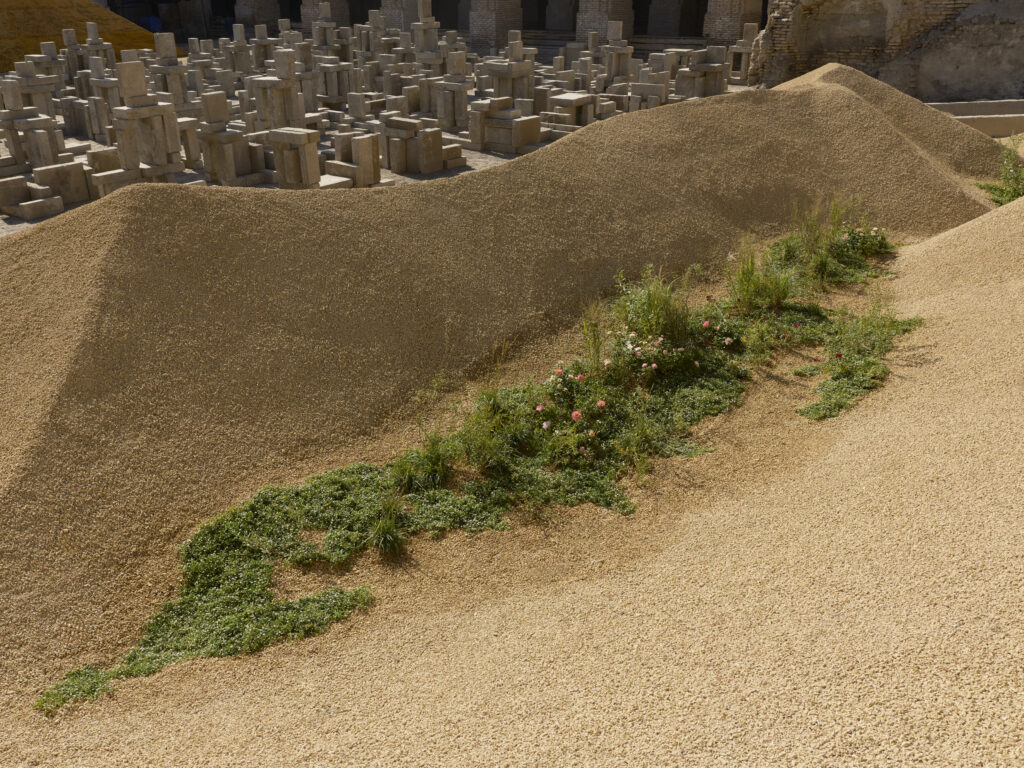
Nearby stood another memorable installation by Konstantin Lazarev and Ruben Saakyan: in the courtyard of the Khoja Kalon Mosque, they laid out dunes made of broken brick, and in the heart of this “desert” landscape, green grass unexpectedly sprouted—like a small Bukhara oasis caught between the Karakum and Kyzylkum. For centuries, Bukhara welcomed travelers exhausted by the road, offering them water and shade. Now it generously extends a respite from the grayness of everyday life.
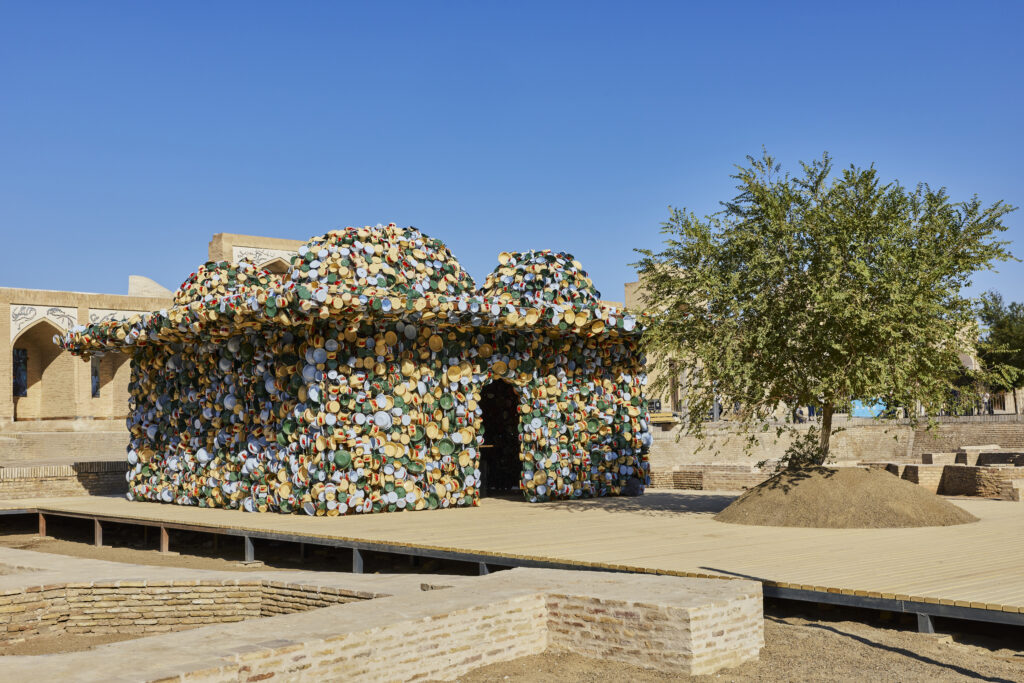
The Indian artist Subodh Gupta, known for his art objects made from kitchenware, built a structure out of enamel pots, lids, cans, and bowls—the kind of utensils found in almost every Uzbek household. Inside, the space is decorated with ceramic lyagans, and in the center stands a counter with stools. A devoted enthusiast of gastronomy, Gupta also offers visitors dishes of his own making (the day and time can be found in the Biennial program).
Behind the Poi-Kalon mosque, the prayer room Musalla was installed—a modular object brought from the Biennial in Jeddah, Saudi Arabia. The construction was constructed entirely from palm-derived materials: the frame from compressed bark, the ropes from leaves. They were dyed with natural pigments from pomegranate, henna, turmeric, olive oil, and indigo. Inside, there are forty seats each for men and women, and the design itself provides cool shade while allowing free circulation of air. At the Uzbek Biennial, the structure emerged as a symbol of Bukhara’s dialogue with the wider Islamic world.
“It is a powerful meditation on Islamic architecture and memory—and a perfect complement to our own ethos of continuity and reinvention,” said Biennial commissioner Gayane Umerova about the project.
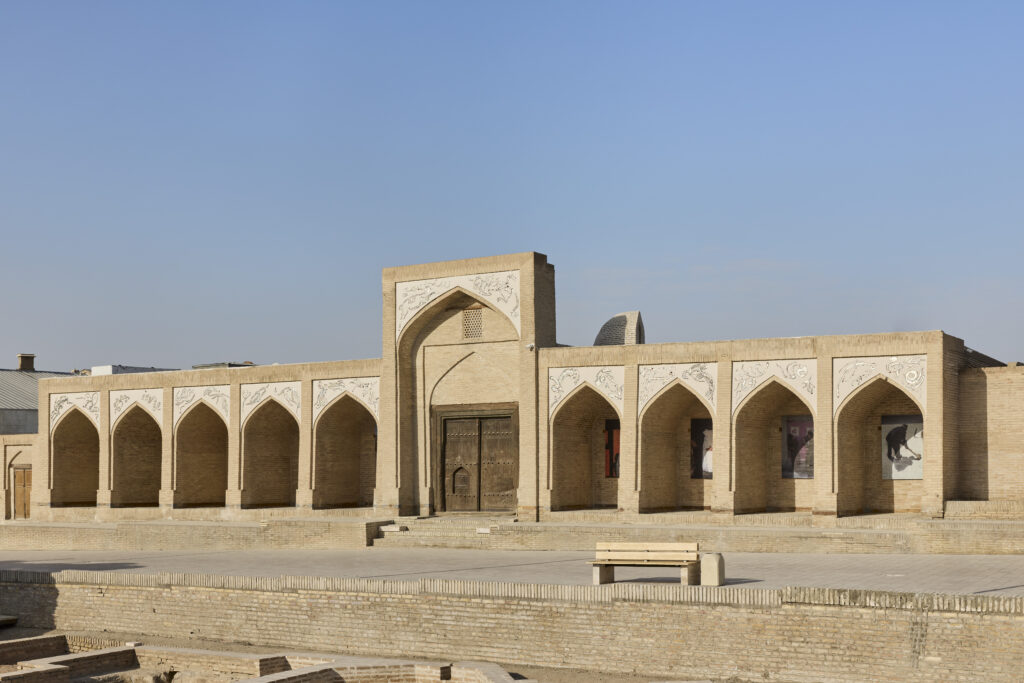
A project by local photographer Behzod Boltaev also made a strong impression in Bukhara. His works were printed on clay tiles and embedded into the niches of a caravanserai’s outer wall. Behzod dedicated this series to his late father, Shavkat Boltaev, founder of the Bukhara school of photography. In each portrait one can see simple faces and the quiet strength of love and respect. And the title of the work—Healing—speaks for itself.
“Some time after I was invited to take part in the Biennial, I had a dream: my photographs printed on a concrete slab. ‘What if,’ I thought, ‘I printed them on ceramics instead?’ With this idea, I approached the renowned ceramist Abdulvahid Bukhari. He supported me, and his wife, ceramist Dilnoza Karimova, helped me bring the idea to life. It was my first experience of this kind and, I admit, it wasn’t easy,” shared Behzod Boltaev.
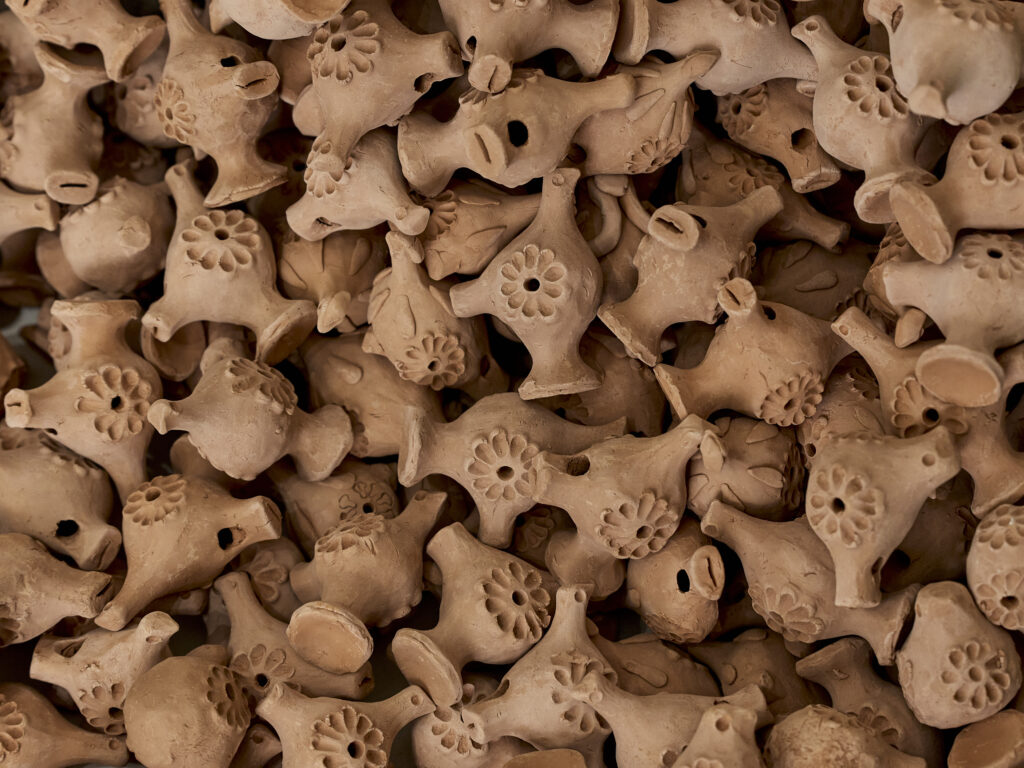
Some works quite literally invited participation. For example, the artist David Son Tappeser encouraged visitors to play a hushtak—a clay whistle—and record a brief melody. The improvised sounds were then broadcast through speakers in the caravanserai courtyard, merging into a single chorus. Visitors could take the hushtak home as a keepsake.
The Biennial is also valuable for opening doors to a number of sites that were previously inaccessible. Residents of Bukhara and visitors to the city can now step inside and explore the Gaukushon madrasah, built in 1567, and the Khoja Kalon mosque, erected in 1598, together with its minaret—buildings that form a remarkable ensemble. In addition, the Rashid madrasa, founded by an Afghan tea merchant, has opened its doors, along with an entire cluster of adjoining caravanserais: Ulugbek Tamoki Furush (tobacco merchant), Ahmadjon, Ayoz Chinni Furush (dish seller), and Fotkullojon.
“Newcomers to Bukhara will encounter heritage buildings for the first time, while locals are invited to discover them anew through different possible uses, following a process of restoration that extends the traditional approach to architectural heritage as something to interact with rather than simply to look at. This is the way architecture in Bukhara has always operated, as a meeting ground for visitors from many different places—whether they are merchants, scholars, theologians, or adventurers—that is also a warm, generous home for its residents,” notes Wael Al Awar, creative director for architecture at the Biennial.
The Pochchakul Khoja mosque has also been given a new life. The building has been restored and transformed into a modern library with books in Uzbek, English, and Russian. It now has air conditioning, comfortable tables, chairs, and power outlets—everything to make it convenient for children from nearby mahallas to study, read, and simply spend time. But visitors to the city should also be sure to stop by to leaf through the richly illustrated volumes on the history and culture of Uzbekistan.
There are several such examples of the Biennial’s impact on the city’s infrastructure: a new promenade now links Toki Telpak-Furushon with Khanaka Divan-Begi, connecting two pedestrian zones that were previously cut off by a roadway. A small square near the Savva Morozov trading house has also been refurbished, and today it is home to the Museum of Fine Arts.
“Buildings have been restored continuously, with knowledge shared over generations according to an oral tradition, aided by design drawings as references. The city’s architectural heritage is not fixed in time but rather in constant transformation,” says Al Awar.
Those who come to Bukhara before the end of November should make sure to visit the Biennial. In one place you’ll encounter dunes of brick, in another—a chorus of clay whistles, and elsewhere—a library in a former mosque. Here, contemporary art does not clash with antiquity; it gently complements it, opening new doors and meanings. Don’t miss the chance to see Bukhara in a new light, visit the Oshkozon café, and catch the rice culture festival at the Biennale’s closing, with plov, paella, and jollof on the menu.
The full program is available on the official website.