
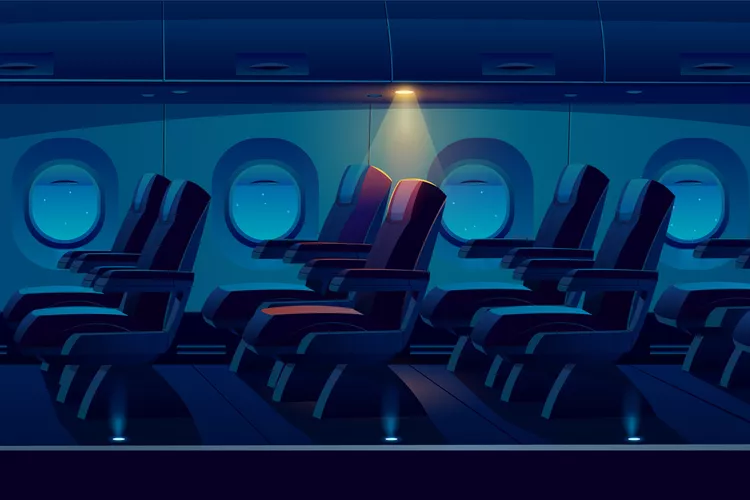
No matter where you’re seated, air travel remains the safest mode of transportation.
According to experts, the safest seats tend to be in the rear of the aircraft – especially those located near emergency exits – as they offer a slightly higher chance of survival in the event of a crash compared to seats in the front.
While air travel remains one of the safest forms of transportation, recent incidents have given some travelers pause before flying the friendly skies.
Passenger aircraft can have hundreds of seats across different cabins, and exact layouts can vary depending on the airline or aircraft model. It’s only natural that travelers ask: Do truly safer seats exist?
Travel + Leisure consulted several leading aviation safety experts to find out a definitive answer.
The experts we spoke to:
John Hansman is an aeronautics and astronautics professor at MIT.
Cary Grant is an assistant professor at Embry-Riddle Aeronautical University’s College of Aviation.
Trisha Ferguson is CEO of The Interaction Group; her team consults on aviation safety.
Why the rear of the aircraft is considered safer
MIT aeronautics and astronautics professor John Hansman shared with T+L that the seats in the rear of the aircraft are generally the safest. He continued, saying that sometimes in the event of an accident, “the front of the airplane acts as a shock absorber.”
Hansman emphasized that every accident is unique, and risk exists in every part of the plane. This was evident during 2012 real-world simulation of an airline crash for an MIT experiment and Discovery Channel program. The educational research team crashed a Boeing 727 plane for research and found that the test dummies placed in the back of the plane would have walked away unharmed, whereas those seated in the middle of the plane would have sustained broken bones. Unfortunately, the test dummies in what would be the first-class cabin, or first several rows, were ejected from the plane in this simulation and likely would have died in the event of a similar accident.
Safety depends not just on location, but also behavior
The airline crash simulation also revealed that wearing seatbelts and sitting in a proper brace position (often described as placing your head in your lap and hugging the back of your legs) helped minimize injury to the test dummies during the simulated emergency.
Cary Grant, an assistant professor at Embry-Riddle Aeronautical University’s College of Aviation, says that while there is some data that the rear of the plane could be safer, for the most part there is no clear safest seat during an emergency due to how different each accident can be in terms of impact location, speed, and angles.
One key factor, however, is proximity to an emergency exit, since the ability to evacuate quickly is critical.
Practical safety advice from the experts
Pay attention to safety briefings – whether via video or from flight attendants.
Wear closed-toe shoes – avoid sandals or flip-flops; sturdy footwear is essential in an emergency evacuation.
Leave personal items behind – including luggage and even your phone. In recent aviation crashes, passengers could be seen filming the incident and evacuation, which could also slow down the process. Keep your seatbelt fastened whenever possible; it remains your most important protective measure.
Don’t ignore the instructions and safety card
Another tip: read the safety card located at every seat.
Trisha Ferguson explains:
“Each aircraft and each door has a specific mechanism. That’s why it’s important to review the safety card and pay close attention to the demonstration every time.”
She also recommends taking a visual inspection to identify the two nearest exits to your seat, and counting how many rows away you are. In cases if a cabin becomes smoky or inverted, it may be difficult to find.
Bottom line: Airplanes are still the safest way to travel
Despite all the precautionary measures, it’s worth remembering that air travel remains exceptionally safe.
According to the International Air Transport Association (IATA), there was just one incident per 880,000 flights in 2024.