This perspective echoes the approach of Eric Broug, a scholar and the author of Islamic Architecture: A World History, which traces 1,400 years of Islamic architectural heritage from Ethiopia to Ecuador. He notes, admitting that the most challenging part was deciding what to include in the book. We share this outlook and invite readers to broaden their perspective by adding a few more architectural highlights to the main itinerary.
Hasan II Mosque, 1989, Casablanca, Morocco
This awe-inspiring mosque is a vivid demonstration of craftsmanship at its highest expression and on a truly monumental scale. The Hasan II Mosque is one of the largest in Africa and among the few in the country open to visits by non-Muslims (appropriate dress is required for entry). Erected on a platform extending into the waters of the Atlantic, it impresses with the monumentality of its stone architecture, while its minaret, rising to approximately 64 meters, makes the building the most recognizable symbol of Casablanca.
By Mallory Farrugia
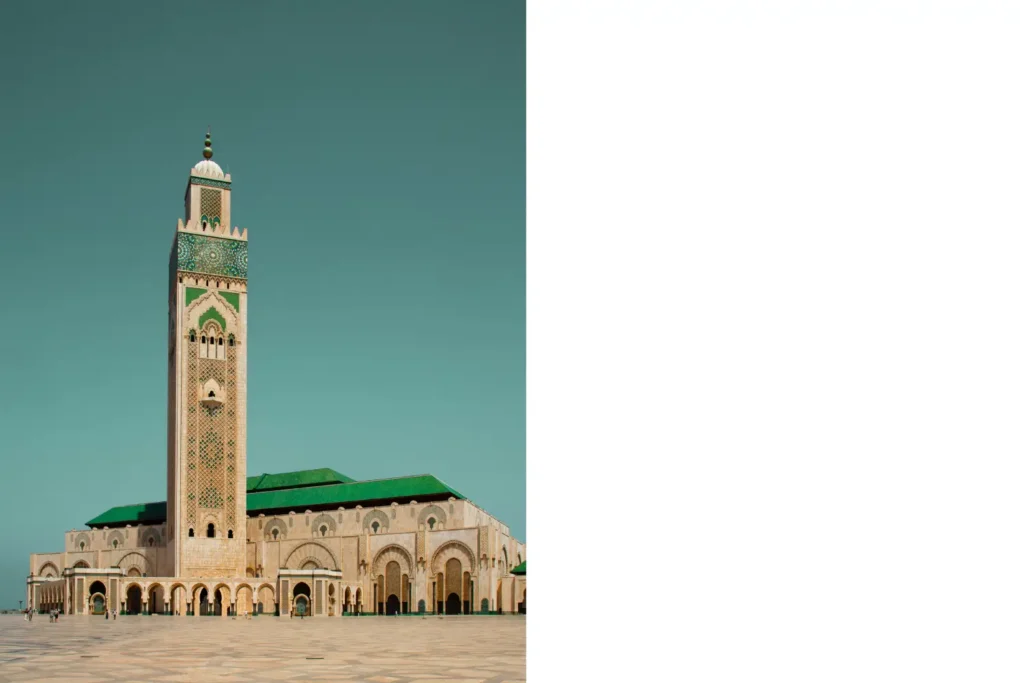
Photo: Jimmy Woo, Unsplash
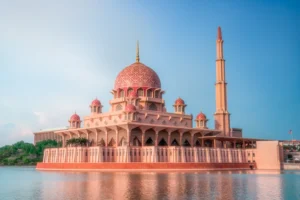
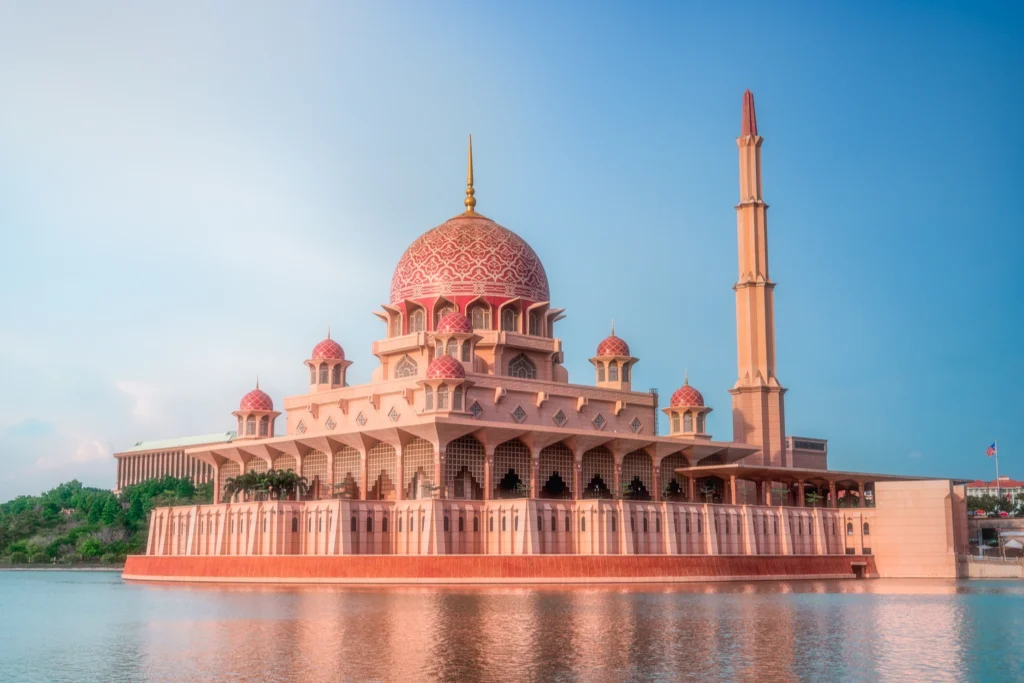
Putra Mosque, 1999, Putrajaya, Malaysia
With its rose-hued dome, the Putra Mosque has become one of Putrajaya’s most recognizable landmarks. Named after Malaysia’s first prime minister, it can accommodate up to 15,000 worshippers. Constructed from rose-tinted granite, the mosque blends Arab-Islamic architectural traditions with local craftsmanship, most notably evident in its finely carved chengal-wood interiors. A 116-meter minaret rising in five tiers – symbolizing the Five Pillars of Islam – and a main dome measuring 36 meters in diameter shape its striking silhouette. The mosque stands beside the Perdana Putra complex, the prime minister’s residence, overlooking the scenic waters of Putrajaya Lake.
Sheikh Jaber Al-Ahmed Cultural Center (2016), Kuwait City
“Islamic geometry has a profound visual tradition and has always been used to adorn buildings and to engage people who walk past them. Here, this has been done in an imaginative way, to scale the pattern up to such a size while remaining cohesive. The inside of the building is a knockout as well.” By Eric Broug
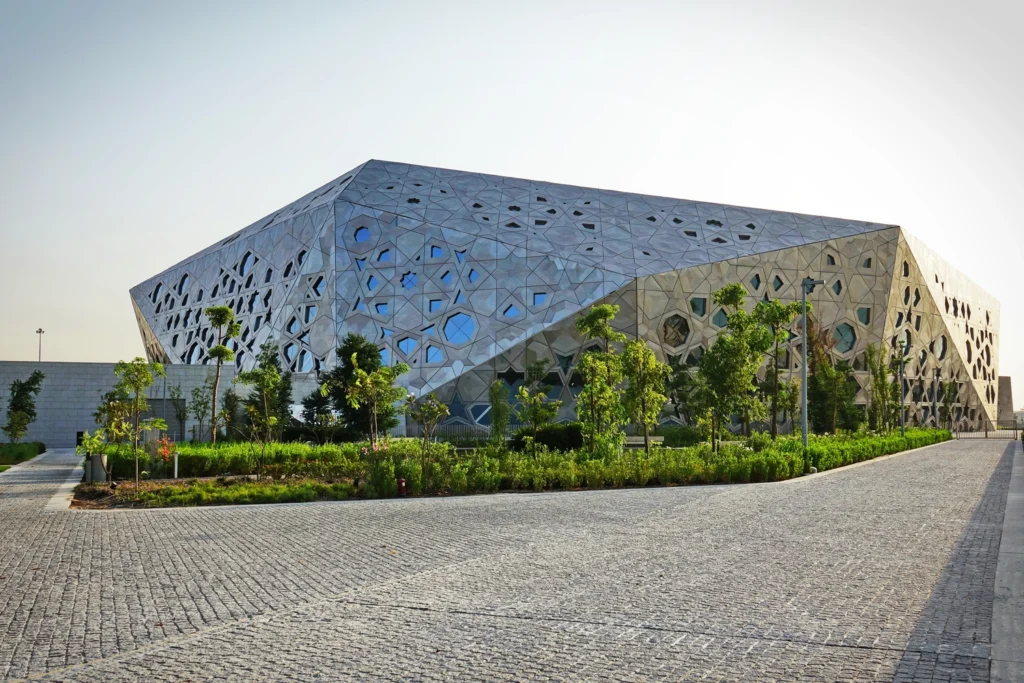
Photo: Mikedotta, Shutterstock
Abrahamic Family House, 2023, Saadiyat Island, Abu Dhabi, UAE
Designed by British architect David Adjaye – this multifaith center rises at the meeting point of desert and sea. Its uniqueness lies in bringing together a mosque, a church, and a synagogue within a single architectural complex, reflecting the shared values of the three Abrahamic religions. The three houses of worship – the Mosque of His Eminence Ahmed El-Tayeb, St. Francis Church, and the Moses Ben Maimon Synagogue – are open for religious services and welcome people of all faiths. By Barno Ikramova
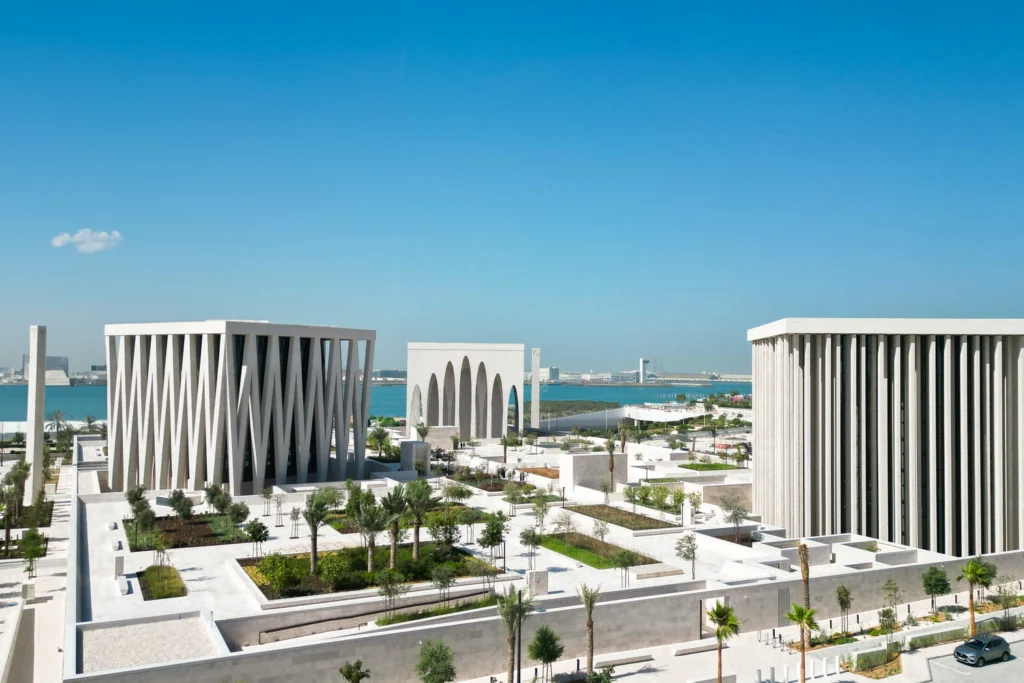
Photo: Department of culture and tourism
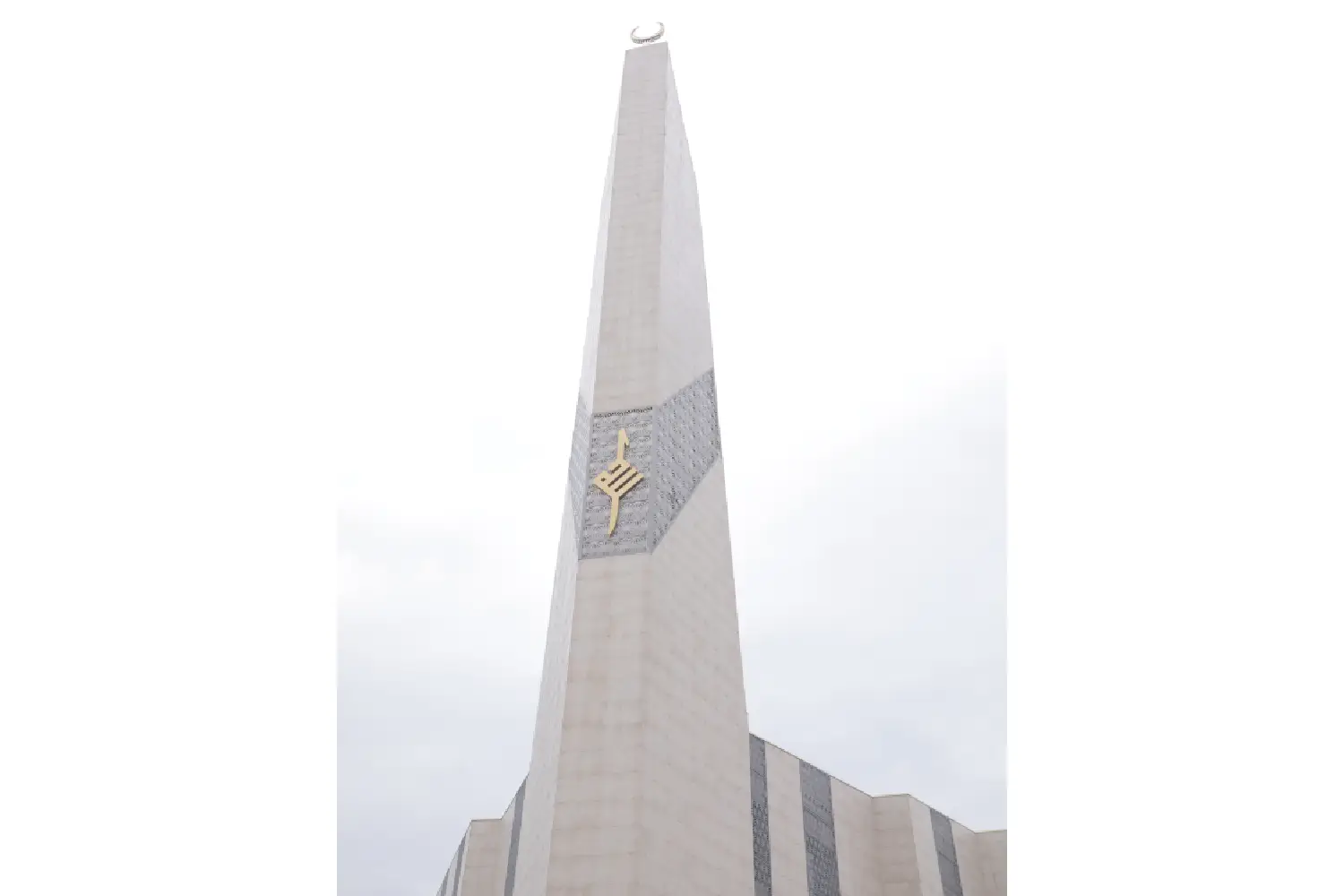
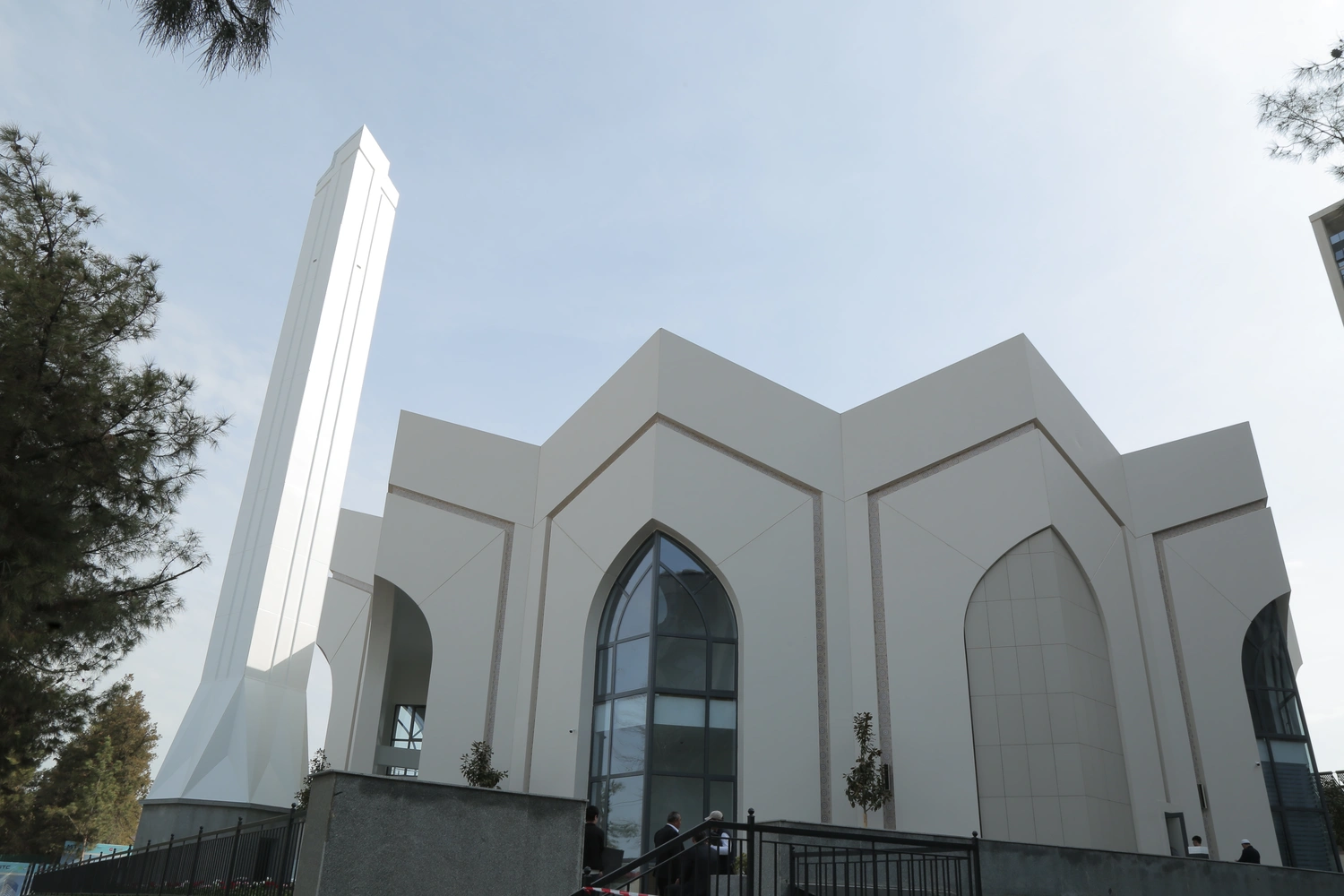
Tepa and Hasanxon Kori Mosques, 2023 and 2024, Tashkent, Uzbekistan
In Tashkent, Islamic architecture increasingly speaks the language of the 21st century. The Tepa and Hasanxon Kori mosques are two striking examples of this reinterpretation, where tradition meets a restrained hi-tech approach. Both mosques were completely rebuilt on the sites of their previous structures and today stand out for their clean lines, bright façades, and minimalist decorative details.
Karabaglar Mausoleum (1338), Nakhchivan, Azerbaijan
“This is a total masterpiece – I’d never seen anything like it before. It was built in honor of the wife of a grandson of Genghis Khan, and as a building that has made it into the 21st century, it’s one of a kind.” By Eric Broug
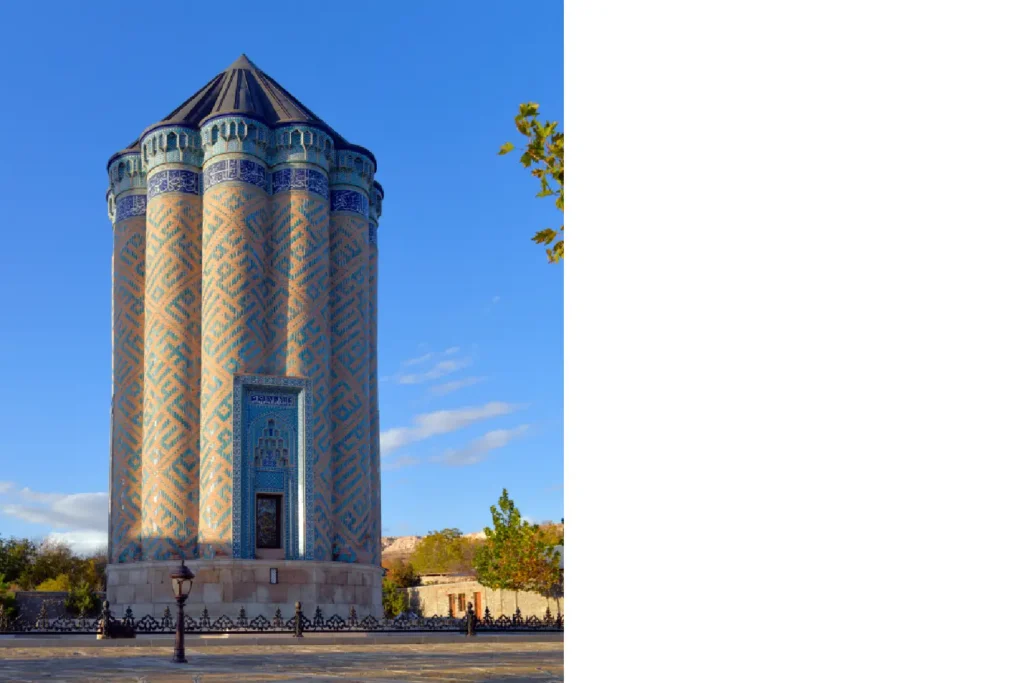
Photo: Mtcurado, IStock
Abu Hanifa Imam A’zam Mosque, 2023, Dushanbe, Tajikistan
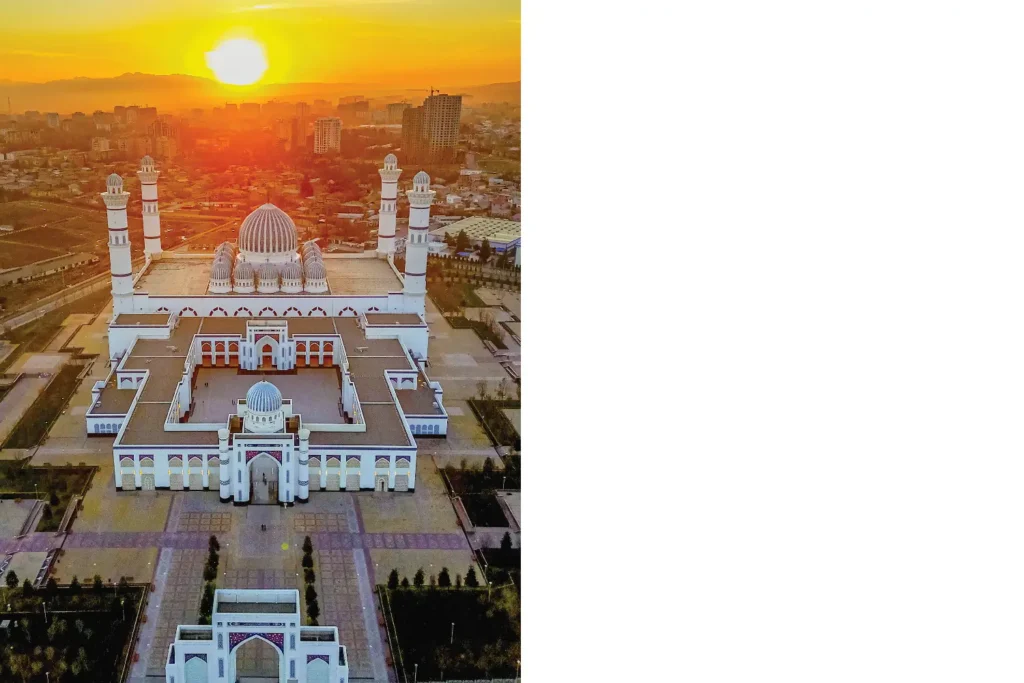
Photo: Didor Sadulloev, IStock
Dushanbe’s central congregational mosque is the largest religious complex ever built in Tajikistan and the biggest mosque in Central Asia. It can accommodate over 180,000 worshippers at once. Designed by architects from Tajikistan and Qatar, the 12-hectare complex brings together contemporary engineering solutions with the principles of traditional Tajik architecture and can accommodate more than 180,000 worshippers at once. The mosque’s design incorporates black marble, decorative tilework, and carved walnut-wood doors, while the inner courtyard with a fountain is intended for open-air communal prayers. The complex is complemented by three hotels, underscoring its role as a destination for both pilgrims and city visitors.
The material was published in Travel+Leisure Central Asia magazine (February-March 2026)