

What is it?
This is the ICAO phonetic alphabet, created to make aviation communication clear and reliable. It was first developed in 1913 and later officially adopted by the International Civil Aviation Organization.
Why is it so important?
Imagine a controller and a pilot communicating over the radio with interference, different accents, and background noise. In such conditions, ordinary letters can easily be confused:
- “B” might sound like “V”;
- “M” might sound like “N”;
- “F” might sound like “S”.
In aviation, any mistake can have serious consequences. That’s why each Latin letter is replaced with a clear, easily distinguishable word. This way, even in poor communication conditions, messages are received accurately.
How does it work?
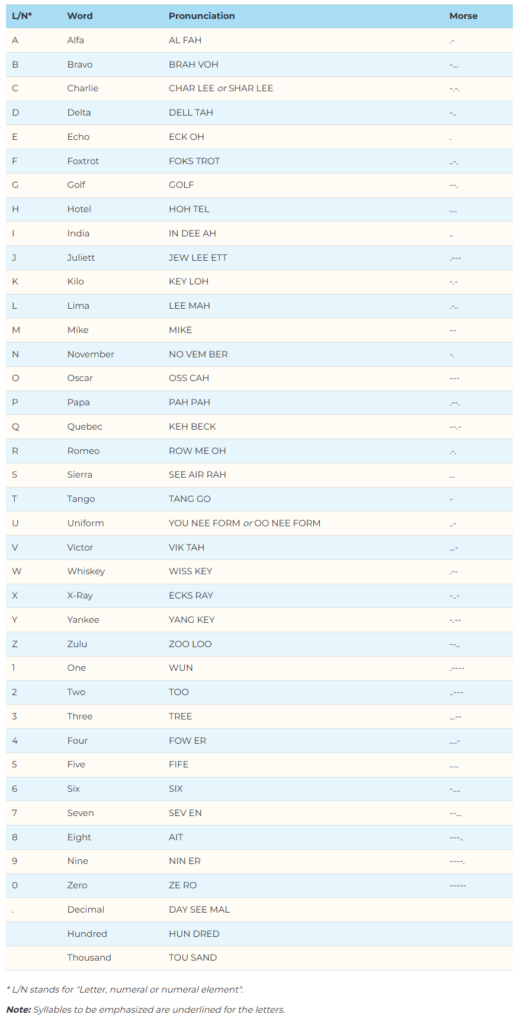
Each letter corresponds to a code word:
- A – Alpha
- B – Bravo
- C – Charlie
- D – Delta
- E – Echo
… and so on, up to Z – Zulu.
For example, the airport code for Tashkent is TAS. Over the radio, it is transmitted as:
Tango – Alpha – Sierra.
Where else is it used?
Although the system was created for aviation, it’s now used in other areas where precise communication is critical:
- Military communications
- Naval operations
- Rescue missions
- Emergency services
Thus, this simple set of words becomes a reliable tool that helps avoid misunderstandings and ensures safety worldwide. Next time you hear it at the airport, you’ll know exactly what it means.