
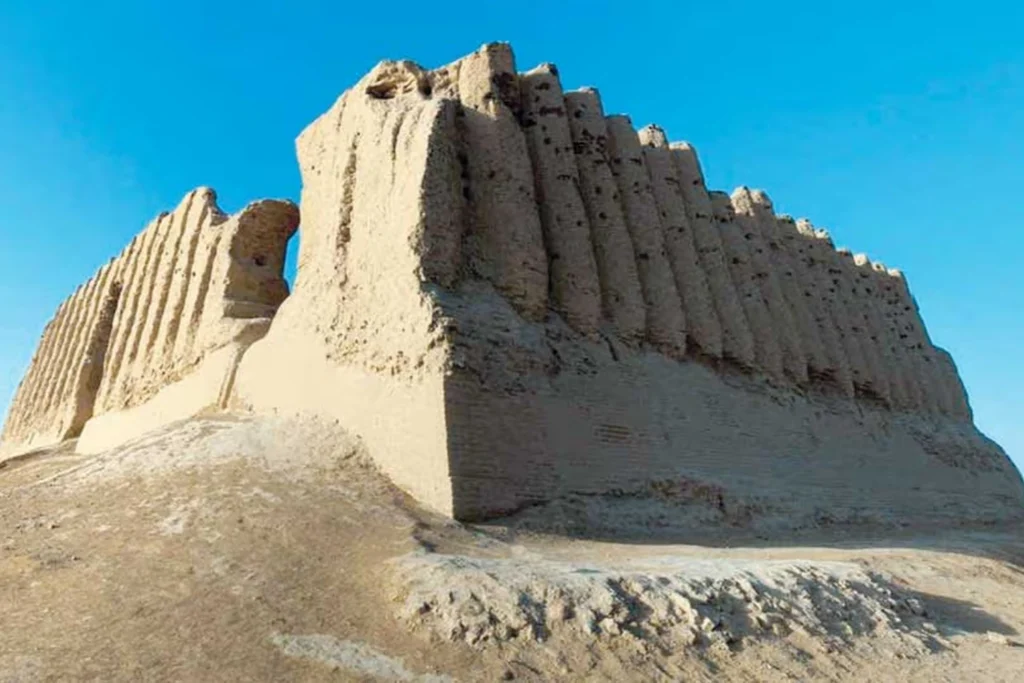
Ancient Merv is one of the most significant historical sites in Central Asia. It is included on the UNESCO World Heritage List and is regarded as an important part of global history. The archaeological reserve is located in the ancient delta of the Murghab River, where people lived and built cities for nearly five thousand years.
This area developed in an unusual way. Unlike most ancient centers, where cities were built layer upon layer, settlements here were relocated as the river changed its course. This gave rise to the phenomenon known as the “wandering cities.”
Thanks to this pattern of development, monuments from different eras – from early farming communities to large state formations – have been preserved within a single territory.
Merv gained international scholarly recognition through archaeological research. The work of Viktor Sarianidi demonstrated that Gonur Depe was the center of ancient Margiana, a Bronze Age civilization that played an important role in the history of the ancient East. A significant contribution to the study of the region was also made by Professor Mikhail Masson, whose research laid the foundation for further studies that continue to this day.
Archaeological finds testify to the high level of development of ancient societies. Researchers have uncovered complex irrigation systems, cult structures, and examples of jewelry art. Many buildings display clear astronomical orientation, indicating advanced engineering knowledge and a deep understanding of the surrounding world.
Preserving the heritage of Ancient Merv remains an important task for Turkmenistan. The site is viewed not only as a historical monument but also as part of the country’s contemporary cultural policy. International projects and exhibitions introduce global audiences to the region’s ancient civilizations and help to strengthen interest in its history.