
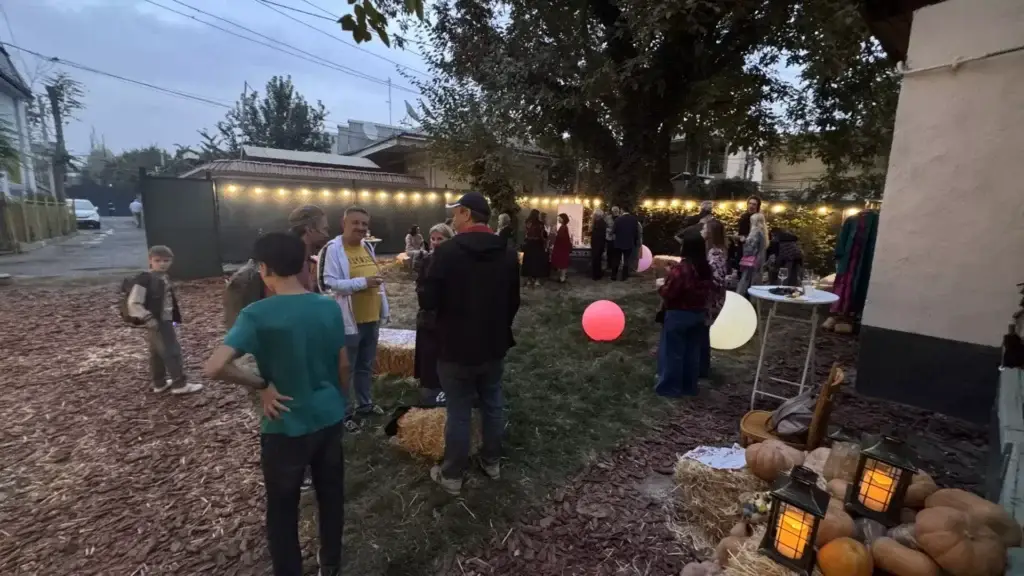
One such project is the newly opened Haqiqiy Gallery, located in an old house that was officially slated for demolition — yet unexpectedly received a second life.

A Gallery Born on the Edge of Disappearance
This art space is the result of a collaboration between artist, art historian, and ceramist Alexandra Romanova and entrepreneur Khushnud Yuldashev (founder of Chateau Kolkhoz). The gallery was named Haqiqiy, which translates to “Real” or “Authentic.” Few names could suit this place better. Situated in the heart of Darkhan, between the historic buildings of Old TashMI and the gleaming new Darhan Avenue complex, the house seems to exist between the past and the future.
A Location That Exists Only in the Present
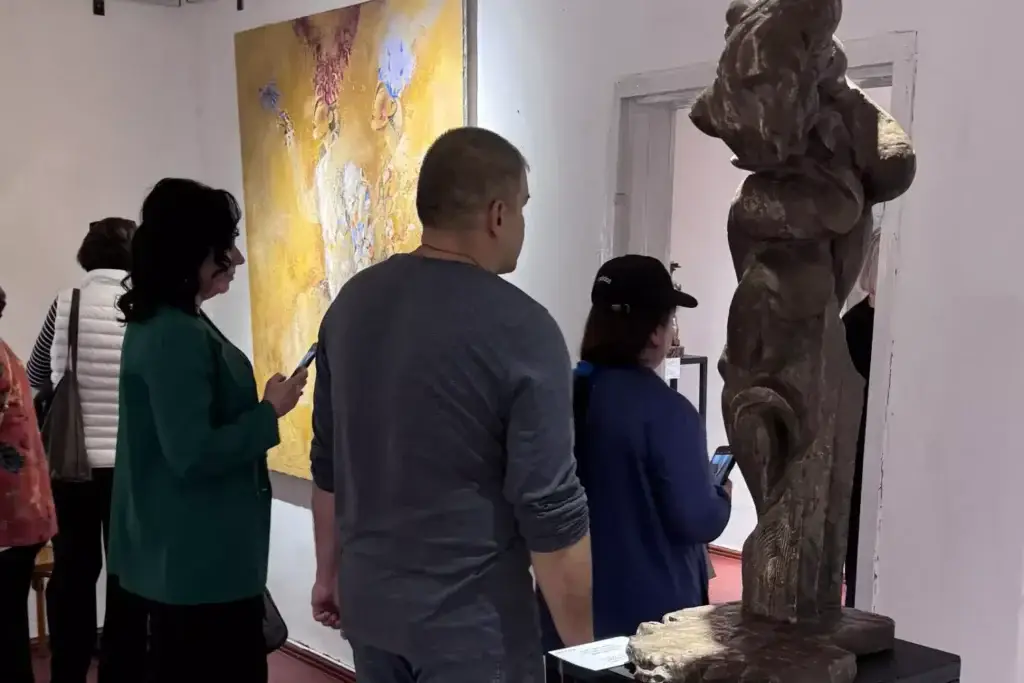
The gallery opened with an exhibition by two acclaimed masters — sculptor Eduard Safaryan, known for his granite bas-reliefs at the “Almazar” metro station, and painter Timur Ernst Akhmedov.
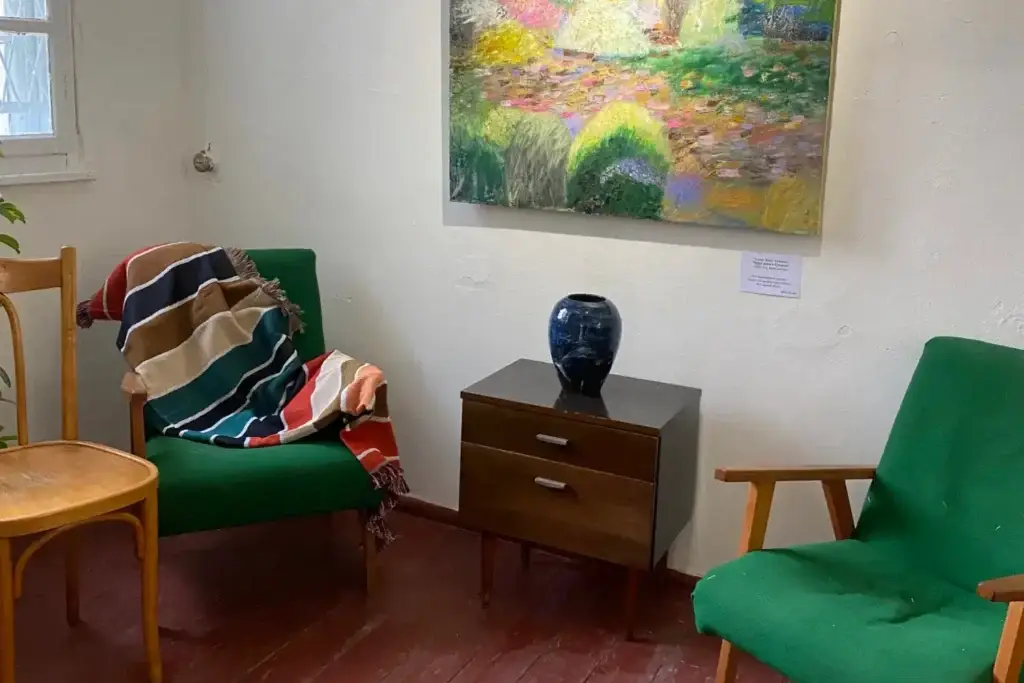
The organizers created a concept in which the artists’ works complemented each other: paintings and sculptures appeared in every room, accompanied by Japanese haiku, while ceramic panels were placed on the brick wall in the garden, blending seamlessly with the landscape.
“We have only the present,” says curator Alexandra Romanova. “The future is uncertain, the past cannot be returned. We live only today.”
And it’s not about Buddhist Zen — it’s about reflecting on the past, within whose scenery contemporary art, culture, and, more broadly, our civilization continue to evolve.
Here, it’s impossible to remain just an observer — visitors become part of the installations. The house, the courtyard, its architectural scars and tiny fragments of memory — everything has been transformed into a unified art object.
A Growth Point for New Ideas and New Names
The gallery will not limit itself to exhibitions: creative meetings and art performances are planned. The space is open to travelers who want to discover the non-touristic old Tashkent — layered, raw, and alive. And also to artists, collectors, and anyone seeking inspiration.
Haqiqiy proves that fragile temporality can become a source of strength. An abandoned house turns into an artistic manifesto, and Tashkent once again shows that the past and the future cannot be separated by a timeline — they exist side by side, on one light and elusive wave.