
Photographs courtesy of Uzbektourism
The Road to Khiva
At five o’clock in the morning, the Centrum Air flight took off from the domestic terminal of Tashkent Airport. The hour-long flight to Urgench passed in the blink of an eye. Yet already en route from the airport, I suddenly realized I no longer recognized Khorezm anymore: in just two or three years, the cities had transformed beyond recognition—new roads, houses, and storefronts. Our bus took us straight to the Karvon Saroy Hotel in the brand-new Arda Khiva tourist complex, where a hearty breakfast and a short rest awaited us before the day’s exploration.
The Sun Over the New Khiva
When we stepped outside, the sun blazed as if Ahura Mazda himself were testing our endurance, while the hot wind whispered the name of Zarathustra. According to legend, it was here in ancient Khorezm that the sacred book of Zoroastrianism, the Avesta, was composed, and Khiva was referred to in its pages as “Urva” or “Urga.” Fittingly, the Avesta Museum is located in the heart of Ichan Kala, within the Matpanbay Madrasa, preserving the memory of a book that is over 2,700 years old.
Satellite City
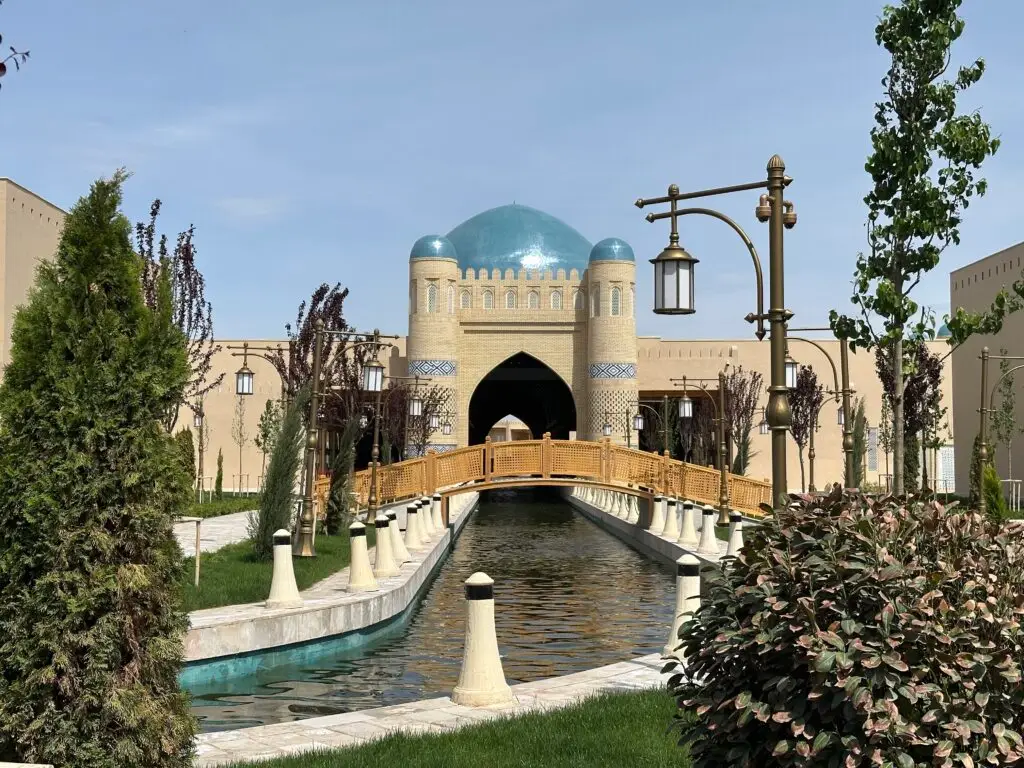
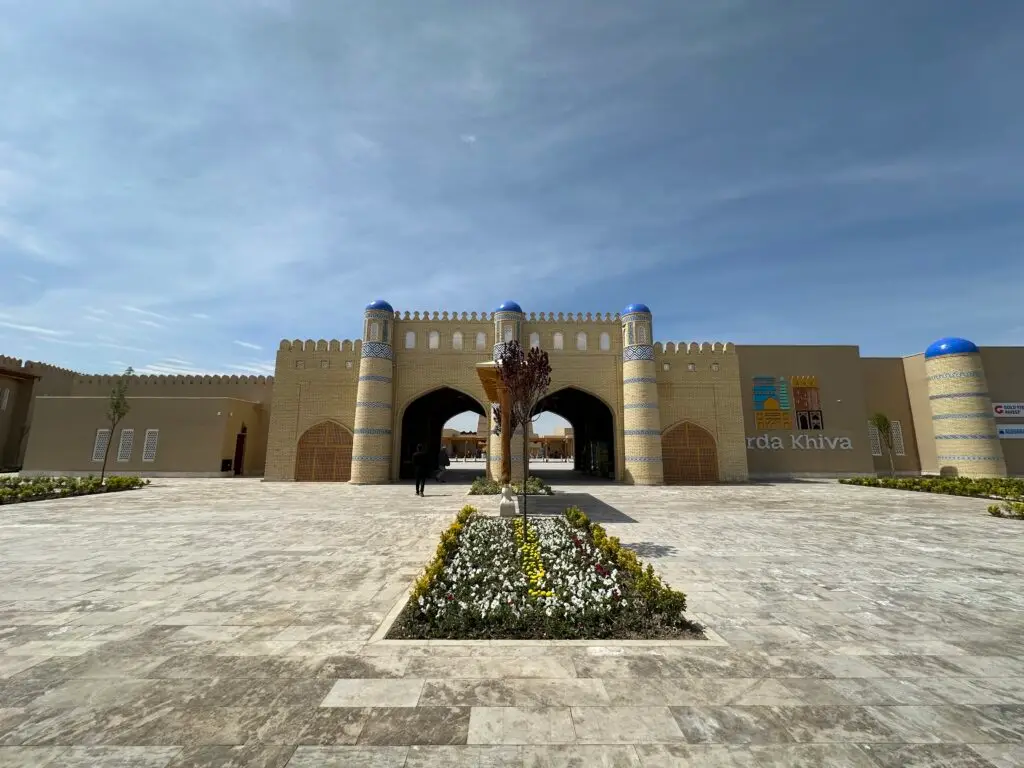
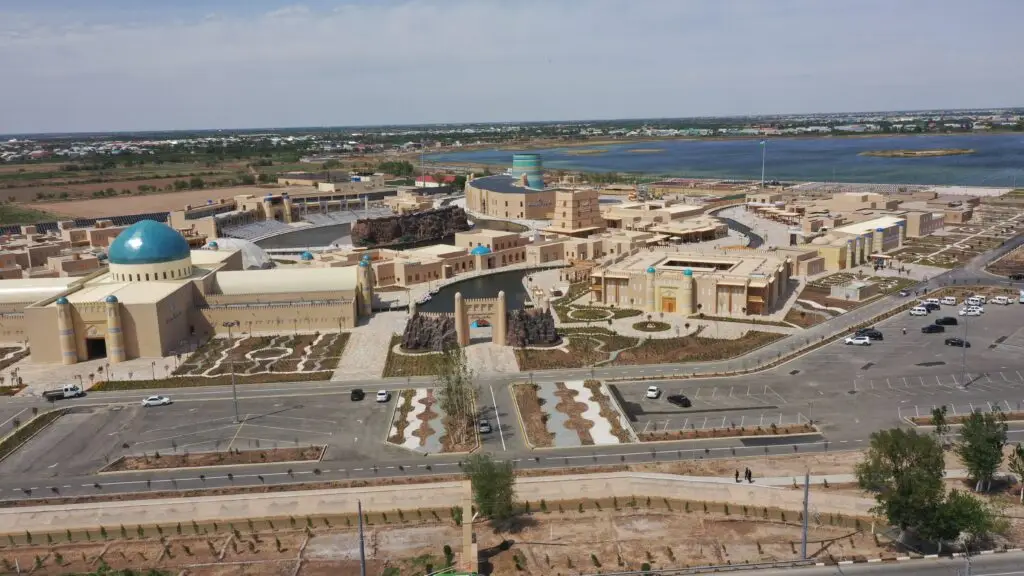
Through the Kosh-Darvoza gates, you enter a miniature Khiva: replicas of Kalta Minor, medieval facades, and a canal with gondolas—Khorezm’s own Venice, designed for leisurely strolls. We headed to the Elxoros jewelry center, built in the style of Chodra Hovli—a 19th-century country palace that once belonged to the Khan of Khiva. Inside, the cool air conditioning was a much-needed relief. We took the elevator to the fifth floor—to a terrace with a stunning panoramic view of the new city. Local photographers, tourists, and newlyweds love to stage photo shoots here. From above, you truly grasp the scale of Arda Khiva’s development. From here, you can truly see the scale of the new city. Despite the blistering heat, the park was crowded with people, and the cafés were full.
What Lies Within
There are hotels and guesthouses, water parks and an amphitheater, cinemas, and the Chorsu Bazaar. Eight modern hotels provide over a thousand beds, along with 12 guesthouses. Without leaving the area, tourists can relax and stock up on souvenirs here. And if not for the thought of a heavy suitcase, I probably would have bought half the items displayed on the market stalls.
History and Craftsmanship
The name “Arda Khiva” means “port city.” Once, the Amu Darya River flowed near Khiva. Over time, the river shifted its course, but Lake Govuk-Kul, covering about 150 hectares, remained. It was from here that ancient craftsmen took clay to build the Ichan Kala fortress, and the surroundings of Lake Govuk became a haven for artisans and builders.
Festivals and Events
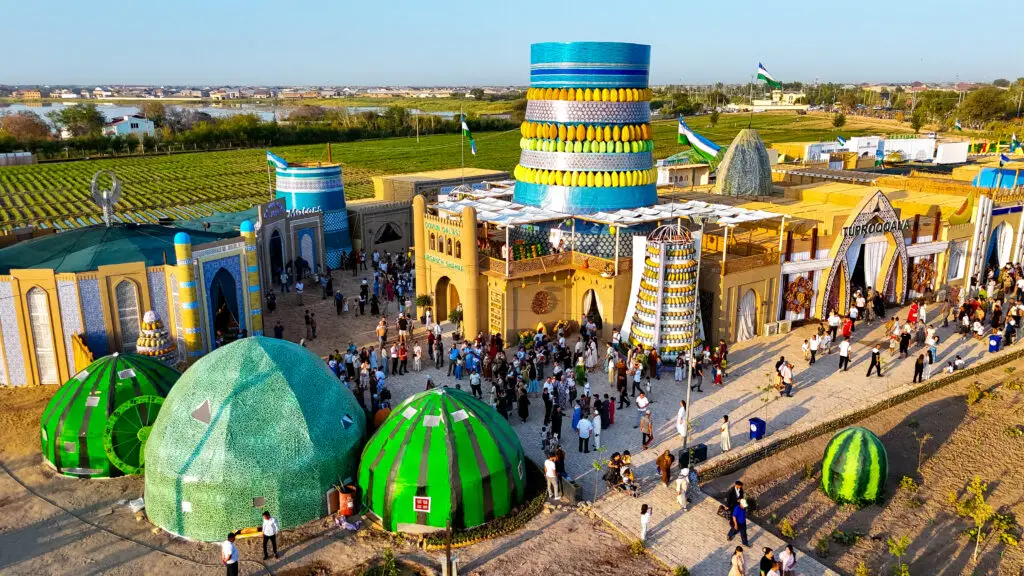
Instead of official figures about thousands of tourists, I’ll just (simply) say this: we happened to arrive during the Melon Festival. At first, foreign guests sampled the melons cautiously, but soon they were asking for more. Melon marmalade, watermelon cocktails, melon-shaped bags, and fiery Khorezm dances—it all felt like a true carnival.
Food
Khiva Saroy. We tried tukhumbarak ($5.58), noodle broth ($1.75), and sazan fish ($7.58). The menu also featured “Izhjan” tartare made from raw meat ($1.28), but we didn’t dare to try it.
Mirzaboshi Terrace. Here they served shivit osh—the “green lagman,” included in UNESCO’s global gastronomic heritage. Its color comes from dill juice. This dish has become a symbol of the region, though today it’s prepared far beyond Khorezm.
Sofra. A restaurant you can visit only by reservation. When I arrived, there was already a line of people waiting to get in. The best spot is on the second floor, on the open-air terrace. In the evening, Turkish singer Veysel Dülger performed live. Live music, strings of lights, and the unforgettable taste of the dishes—an assortment of barak dumplings, kebabs, meat medallions, and a rich, hearty mastava soup.
Restoran Xon Ayvon. A new terrace in Arda Khiva. Recently opened. Here we were served samsa, roasted chicken with a golden crust, and kovurdok—pan-fried meat with potatoes. What I especially loved was the evening atmosphere: a light breeze, the lights of Arda Khiva at night, the open space, and the stars above.
Evening Stroll
The second day in Arda Khiva was coming to an end, and the journey back home awaited us the next morning. After dinner on the terrace at Xon Ayvon, we walked past the gondola station: the gondoliers were already preparing their boats for the night—stacking oars, removing velvet cushions, and chatting quietly after a long day’s work. We asked them to take us for a ride along the canal, and they agreed, even though it was already midnight. Apparently, the old Uzbek saying proved true—a guest is more valuable than the host. We stepped into the boat; the lanterns in the park were still glowing, their light shimmering on the water. Gliding down the 2.5-kilometer canal was pure pleasure—twenty minutes of stillness and beauty. By midnight, the tourists had dispersed, and the atmosphere turned special, almost mystical. The most striking moment, for me, was when we glided beneath the grand dome of the Chorsu Bazaar. I find myself thinking that in twenty years the young trees will grow strong, transforming Arda Khiva into a shaded green oasis. And I will return for the Melon Festival to taste thousands of flavors and hundreds of varieties of Khorezm has to offer.
The material was published in Travel+Leisure Central Asia magazine (Autumn 2025)