
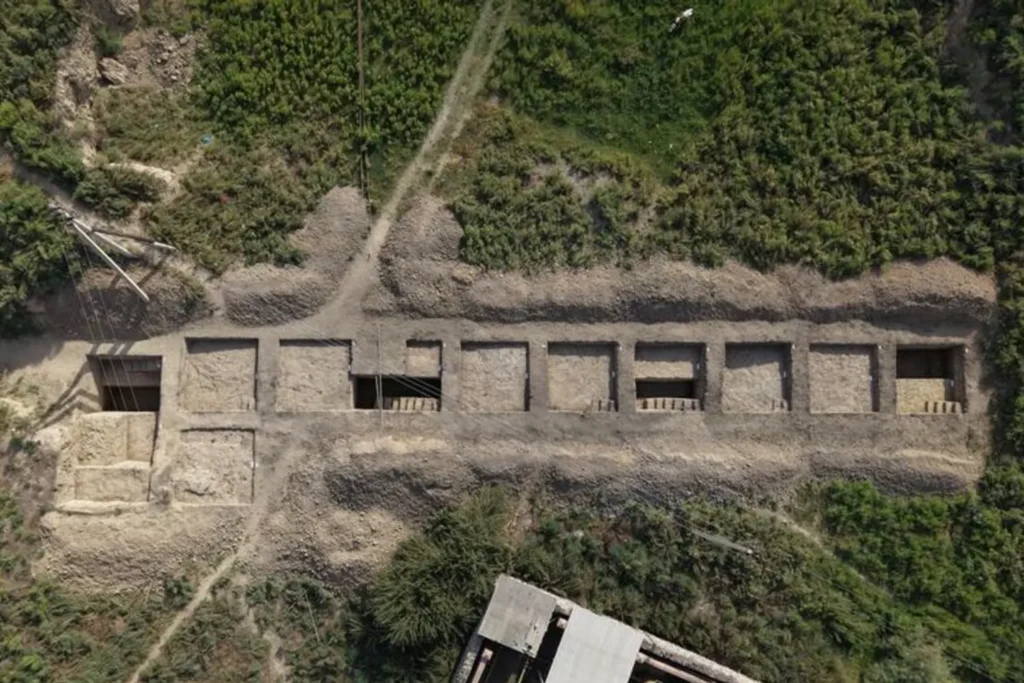
Archaeologists from China and Uzbekistan have discovered the remains of the Kuva settlement dating back more than two thousand years. The excavations reveal the history of the fortifications, palaces and workshops of the ancient settlement, which played a key role on the Silk Road.
In the Ferghana Valley (eastern Uzbekistan), archaeologists from China and Uzbekistan have discovered the remains of the walls of the Kuva settlement, dating back to the III century BC–X century AD.
According to the participants of the Luoyang Ferghana expedition, the find is important for studying the history of the settlement on the Silk Road and cultural exchange between East and West. It also demonstrates international cooperation within the framework of the Belt and Road Initiative.
The Kuva settlement occupies about 110 thousand square meters and was a strategic point on the ancient trade route, maintaining ties with China for more than two thousand years.
The fortifications, which were reconstructed many times, were used from the era of the Parthian kingdom and the Dayuan state to Sogdiana and Samanids.
Liu Bin (head of the Chinese expedition) noted that changes in construction technologies provide information about the skill of builders, the choice of materials and cultural influences.
A joint expedition of the Luoyang Archaeological Institute (China) and Ferghana State University (Uzbekistan) was established in 2023 to excavate Kuva.
At the moment, palaces, city gates, residential buildings, streets and workshops have been discovered.
“Excavations of the palace complex are planned next year to fully restore the layout and functional zoning of the settlement,” Liu Bin added.